
Emergency Shower Trailers for Oilfield Locations
- Governing standard
- OSHA 1910.151(c)
- Applies to
- Locations where crews handle corrosive or hazardous fluids
Have this ready when you call
- The lease or site location, and how a trailer reaches the pad
- What fluids or chemicals crews handle there
- How long the trailer is needed, and the crew size on each shift
- Where on location the trailer should sit relative to the work
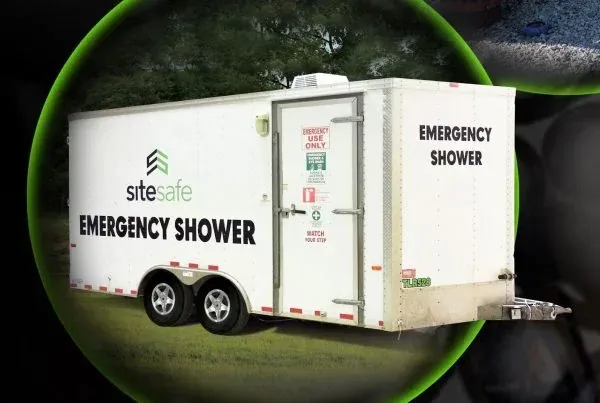
In the event of an emergency spill situation our shower trailers have the capacity and configuration to get your team members washed off as quickly as possible in full compliance of OSHA standards.
We can deliver these units across the US and have an affordable rental model allowing you to provide the safety services that you need when you need them.
How it works
- Emergency shower trailers on an affordable rental model
- Delivery and rig-up on location
- On-site maintenance of the trailers
- No extra containment needed
- Quick removal of hazardous material
- Suited to long-term rentals
Common questions
General information, not a compliance determination for your site.
OSHA’s rule (29 CFR 1910.151(c)) says that where a person’s eyes or body may be exposed to injurious corrosive materials, suitable facilities for quick drenching or flushing must be provided in the work area for immediate emergency use. Acids, caustics and many treating chemicals used on location fall in that category.
The consensus standard for emergency showers, ANSI/ISEA Z358.1, calls for a flush of tepid water for 15 minutes, at least 20 gallons per minute from a shower, from a unit an exposed worker can reach in about 10 seconds. A shower that runs dry, scalds or freezes does not do its job.
Most well sites have no plumbed water. A shower trailer brings its own supply to the location and moves with the work, and an enclosed trailer gives the person being flushed privacy to get contaminated clothing off.
Close to where the exposure risk is, on a clear, level path with no obstacles, and in sight of the work so someone in trouble can be seen and helped. A trailer parked out of the way at the edge of the pad fails the reach-in-seconds test.