
Spill & Secondary Containment: Primary & High-Wall Oilfield Liners
- Governing standard
- 40 CFR 112 (SPCC)
- Applies to
- Well pads, production sites, industrial yards
Have this ready when you call
- The lease or site location, and whether it drains toward a wash, ditch or creek
- What sits on the pad, and the volume of the largest tank or container
- Whether trucks or equipment need to drive across the contained area
- The terrain — flat pad, slope, or restricted footprint — and your timeline
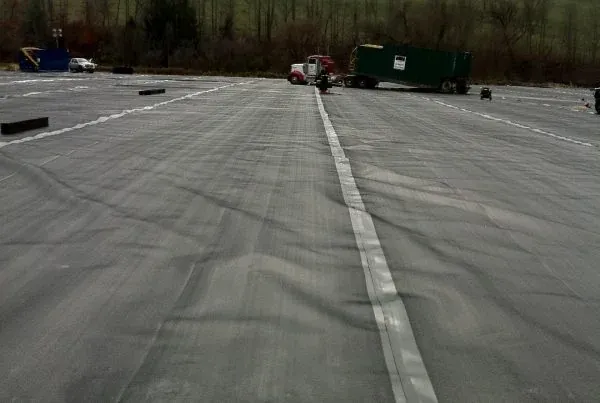
At Site Safe Solutions, our Containment Systems service is engineered to meet the most demanding oilfield containment challenges: from modular drive-over designs for rapid deployment, to large scale primary containment pads tailored to your unique site layout, and high wall systems built for massive volume needs or steep terrain. We specify the right materials, design every layout for ease of installation and maintenance, and handle full installation with factory-trained crews.
Whether you’re working a well pad, production site or industrial yard, we deliver containment that protects your operation, meets regulatory expectations and gives you peace of mind.
How it works
- Modular drive-over containment for rapid deployment
- Large-scale primary containment pads tailored to your site layout
- High-wall systems for large volumes or steep terrain
- Material specification, including advanced HDPE liners
- Layouts designed for ease of installation and maintenance
- Full installation by factory-trained crews
Common questions
General information, not a compliance determination for your site.
Under the federal SPCC rule (40 CFR Part 112), a facility generally needs a spill prevention plan and secondary containment when its aggregate aboveground oil storage capacity is over the rule’s threshold and a discharge could reasonably reach navigable waters. Dry washes and drainage ditches can count. State rules can add requirements, so treat this as a starting point rather than a determination for your site.
Modular drive-over containment suits sites where traffic has to keep crossing and the layout may change. A primary containment pad suits fixed equipment whose footprint is settled. High-wall systems are for large volumes or sloped ground, where a conventional berm would need an impractical footprint to hold the same volume.
Enough for the largest single container plus freeboard for rain. The right figure comes from your spill plan and local rainfall. Remember that equipment added inside the berm later takes up volume the system was designed to hold.
The usual causes are liners degraded by years of UV exposure, seam separation or punctures, drain valves left open, silt build-up that eats into freeboard, and sites regraded so they drain the wrong way. None of these is obvious from a glance, which is why containment that was correct when it was installed may not be now.
Spill containment is the broad term for anything that stops a leak from spreading: spill pallets, trays, kits, portable berms and drive-over mats. Secondary containment is the regulated part of it, a barrier around a tank or container that holds a release from that container until it is cleaned up. On an oilfield pad covered by the SPCC rule, both terms usually describe the same lined berm or high-wall system.
The liner is the impermeable layer inside a berm or containment wall that keeps a release off native soil. HDPE is common on oilfield pads because it holds up to hydrocarbons, produced water and sun. A liner only works if its seams, edges and pipe penetrations are sealed, because fluid finds the weakest point.
Usually, when they hold oil, including produced water that carries oil, at a site covered by the SPCC rule. The rule treats a frac tank as a mobile or portable container, and its containment is typically a lined portable berm sized for the largest single tank plus room for rain. Your SPCC plan and state rules decide the details for a given site.
Yes. Site Safe Solutions describes its business as first class quality service plus innovative design and manufacturing of its own containment products, and its crews handle the full installation.
Guides
All containment articles- ANSI Z358.1 on Well Sites: Emergency Shower Rules
- 55 Gallon Drum Containment on Oilfield Locations
- IBC Tote Containment for Oilfield Chemical and Oil Totes
- Generator Spill Containment on Oilfield Locations
- Well Pad Basics: Layout, Life Cycle and Spill Control
- Fuel Tank Spill Containment for Oilfield Locations
- Spill Containment Berms: Sizing, Wall Types, Field Use
- SPCC Inspection Checklist for Oil Production Sites
- Drive Over Containment Berms: Wall Types, Sizing, Fit
- Secondary Containment Calculator: Worked Examples
- Spill Containment Mats: Sizing, Walls and Traffic
- Oilfield Tank Battery: Leak Points and Containment