A drive over containment berm is a lined pan with walls that lie down when a tire rolls across them and stand back up once it has passed. You use one where a vac truck, fuel trailer or service rig has to park inside containment, and where a fixed curb would mean backing in over a ramp all day. The berm only does its job if the wall comes back up every time and the floor survives the traffic. Pick the wall type for the traffic you actually have, and size the volume for the failure you’re actually guarding against.
This guide covers the common wall designs, which part of the federal SPCC rule applies to trucks and which to parked tanks, a sizing example for a vac truck, and the questions worth asking a supplier before a berm shows up on location.
What a drive-over berm is (and isn’t)
Every portable containment berm has the same parts: a flexible floor, usually a coated fabric or a polyethylene sheet, and a wall around the edge that holds a few inches to a couple of feet of liquid. The drive-over versions differ in one way. At least one side, and often all four, can be crossed by a loaded vehicle without anyone stopping to take the wall down.
It is not a substitute for a lined primary containment pad under a tank battery. A drive-over berm is built to be moved. That makes it the right tool for temporary stations, service trucks and transfer points, and the wrong tool for a 500-barrel tank that will sit in one place for years.
The four wall designs you’ll be offered
Suppliers use different trade names, but the walls fall into a few families. The table compares them on the points that matter on a caliche pad.
| Wall design | How it works | Where it fits | What goes wrong |
|---|---|---|---|
| Foam-core wall | A closed-cell foam log sewn into the edge; tires crush it, it springs back | Frequent crossings by pickups and light service trucks | Foam takes a set after heavy, repeated loads; a flattened section is a low spot in the wall |
| Self-rising / flotation wall | The wall lies flat and lifts as liquid fills the berm | Sites where nothing should stick up in the travel lane | Doesn’t rise for a slow drip that never builds depth; debris under the collar stops it lifting |
| Hinged or L-bracket wall | Rigid brackets hold the wall up; brackets fold down or are pulled to let a vehicle through | Parked trucks that drive in once and out once | Someone forgets to raise the bracket after the truck parks |
| Low ramped curb | A fixed, low wall with a sloped face | Wash points and short transfers with small volumes | Holds little volume; overtopped if the truck parks off center |
The foam and self-rising designs suit drive-through lanes. Bracket walls are better when you need more height and the vehicle crosses only twice per job. Ask which design the supplier is quoting, because a product photo won’t show you how the wall behaves under a loaded vac truck on its fortieth crossing.
Which SPCC paragraph applies to your truck
This is where a lot of berm purchases go wrong, in both directions. The federal SPCC rule (40 CFR Part 112) treats containers differently depending on whether they move.
Mobile or portable containers that stay inside the facility, such as skid tanks, totes and drums over 55 gallons, fall under 40 CFR 112.8(c)(11). Those need secondary containment “sufficient to contain the capacity of the largest single compartment or container with sufficient freeboard to contain precipitation.”
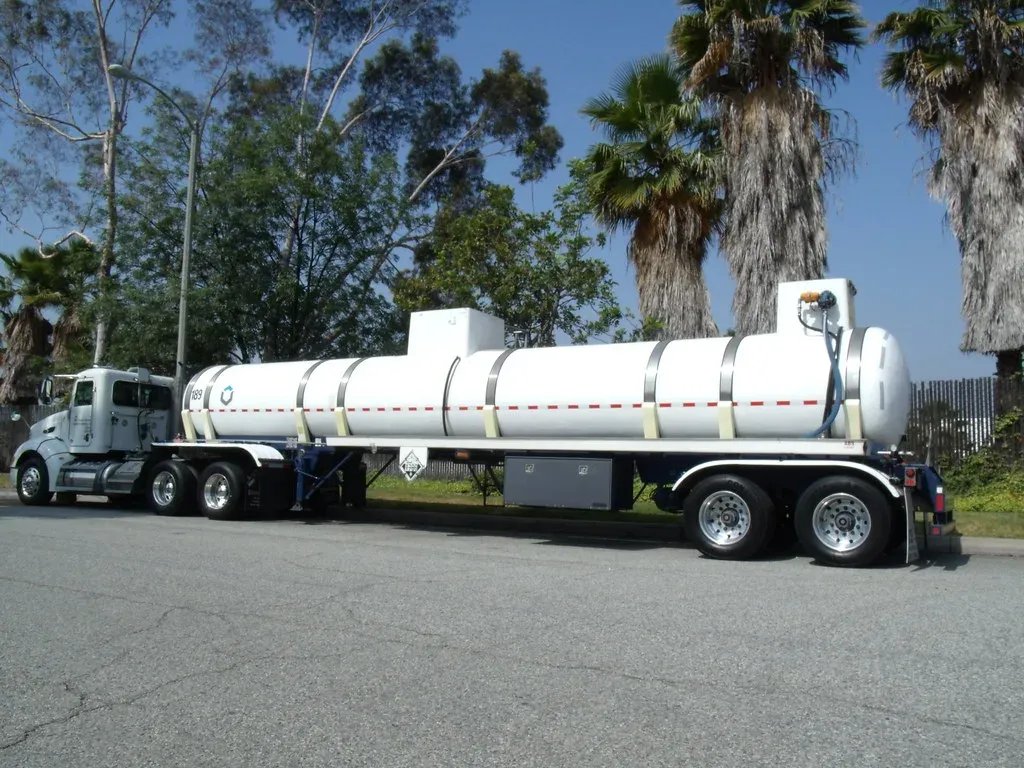
Mobile refuelers and other non-transportation-related tank trucks are carved out of that sized requirement. EPA’s inspector guidance says the carve-out also covers other non-transportation-related tank trucks, and gives “a pump truck at an oil production facility” as an example. These vehicles still fall under the general containment requirement in 112.7(c). That rule sizes containment to “the typical failure mode, and the most likely quantity of oil that would be discharged.”
In practice, a vac truck parked at a tank battery usually needs containment for a hose, valve or connection failure, not for its whole load. A skid tank of diesel sitting on location for the job needs the full-capacity berm. Your SPCC Plan and the engineer who certified it decide which case applies at your site, so check there before ordering.
One more point from EPA’s guidance: oil-absorbing pads and socks count as “active” containment, and they have limits. EPA notes that most commercial spill kits handle roughly 150 gallons or less, and that soaking up a 600-gallon release would take more than 900 high-capacity pads. A berm that is already in place under the truck before the hose is connected is a passive measure. It needs nobody to do anything when the coupling lets go.
Sizing a drive-over berm: a vac truck example
Here’s the math for a vac truck carrying 130 barrels. Swap in your own truck’s numbers.
- Truck volume. 130 bbl × 42 gal/bbl = 5,460 gallons.
- Convert to cubic feet. 5,460 ÷ 7.48 gal/ft³ = about 730 ft³.
- Berm footprint. Say the berm is 12 ft wide and 45 ft long, which is 540 ft² of floor.
- Wall height to hold the whole load. 730 ÷ 540 = 1.35 ft, or about 16 inches, before any rain allowance.
- Rain. NOAA Atlas 14 puts the 25-year, 24-hour rainfall at Midland International Airport at about 5 inches. EPA’s guidance calls that storm a reasonable freeboard basis but doesn’t make it mandatory. Five inches over the berm adds another 5 inches of depth if the berm is left out in the weather.
So a berm sized to the whole load of a 130-barrel truck needs walls around 21 inches high on that footprint, plus whatever the tires and frame displace. Plenty of drive-over walls are lower than that, so check the spec sheet. A lower wall is fine when your Plan sizes truck containment to the most likely release, such as a full hose plus a few minutes of pumping. It’s not fine if someone later parks a skid tank in the same berm and assumes it is covered.
If the numbers don’t work on the footprint you have, a longer berm adds volume without raising the wall a truck has to cross.
The floor gets more abuse than the wall
Walls get the attention, but the floor is where a lot of berms actually fail. Tires twist as a driver steers inside the berm. Gravel picks up in the tread and grinds into the sheet. A dropped wrench or a jack stand point punches through.
Three things help:
- A sacrificial wear layer. A heavy geotextile or a rubber track mat in the wheel paths takes the scuffing so the containment layer doesn’t.
- A clean, graded subgrade. Rake out the rock before you lay the berm. Caliche that has dried into sharp chunks will puncture a liner from below under a loaded axle.
- Know the material. If the floor is HDPE, the GRI-GM13 specification lists minimum puncture resistance by thickness, for example 72 lb for 40-mil sheet and 108 lb for 60-mil sheet. That’s a lab index value, not a promise about a dually tire on rock, but it lets you compare quotes on equal terms.
Check the floor every time the berm is moved. A puncture you can’t see from the cab can drain a berm into the pad in an afternoon.
Questions to ask before you buy or rent
Product pages give a length, width, wall height and a gallon figure. Ask for the rest.
- What vehicle load has the wall been crossed with, and how many cycles?
- How does the wall behave after a week of crossings? Ask for photos from a working site, not a showroom.
- What is the floor material and thickness, and is it compatible with crude, condensate and produced water?
- Does the gallon rating subtract the space taken up when the wall lies down, or is it the theoretical box volume?
- How is rainwater removed, and is there a drain valve that can be left open by mistake?
- Can a torn floor be patched in the field, and with what?
- What does the berm weigh, and how many people does it take to deploy it?
The last question matters more than it sounds. A berm that takes four people to unroll will get skipped on the job where only one hand is available.
Where drive-over berms fit with mats and pads
Drive-over berms sit between two other options. A spill mat or Fast Mat suits a single service truck or a short transfer where quick deployment matters most. A lined primary containment pad suits fixed tanks and equipment whose footprint won’t change. The drive-over berm covers the middle ground: vehicles that park for hours or days in a spot that has to stay open to traffic.
If you’re not sure which you need, start with what sits there, what volume it holds, how often a vehicle crosses and how long the setup stays in place. Those four answers usually settle it.
Need containment that trucks can cross?
Site Safe Solutions supplies Fast Mats for quick, drive-over protection at temporary stations, service trucks and small transfers. The company also designs and installs containment systems, including modular drive-over containment and lined primary pads, for well pads and production sites in the Permian Basin. If you’re still deciding on the response side, the guide to the first hour of a spill covers what happens when containment isn’t in place. To talk through a site, contact Site Safe Solutions.