
High-Pressure Flowline & Hose Restraint Systems for Oilfield Fluid Lines
- Key point
- Any pressure, any application
- Applies to
- Slick-water, nitrogen, energized fluids, standard pumping
Have this ready when you call
- The application — slick-water, nitrogen, energized fluids or standard pumping
- Working pressures, and whether lines are hose, iron or both
- Where lines cross walkways, work areas or muster routes
- The rig-up schedule, and how often lines are broken and remade
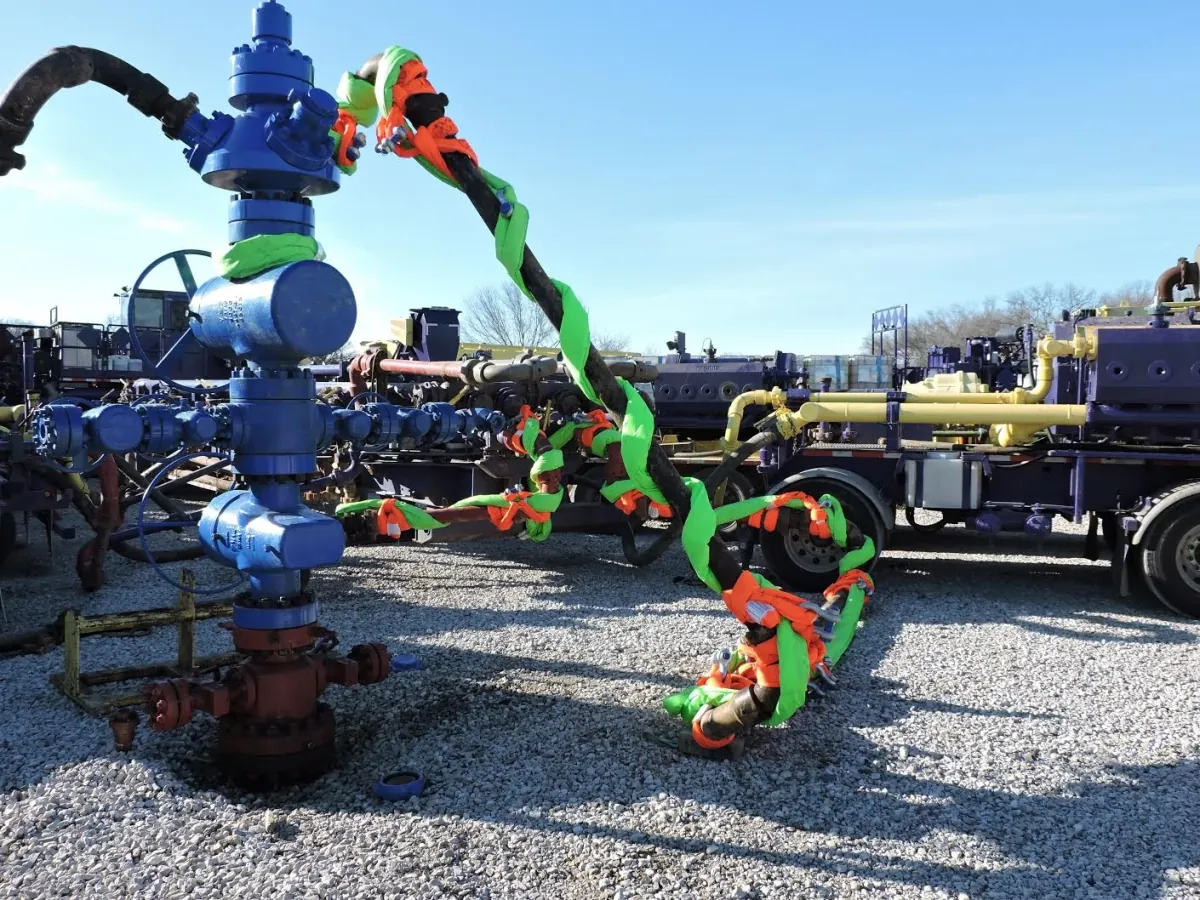
Site Safe Solutions offers industrial-grade Restraint Systems designed for the rigors of oil-field operations: from hose systems to custom high-pressure iron line restraints, we support any pressure and any application you can throw at us. Our modular hardware packages simplify installation and maintenance, reduce downtime during line changes, and bolster safety across fluid transfer systems.
Whether you’re dealing with slick-water, nitrogen, energized fluids or standard pumping operations, our robust restraint solutions hold your equipment secure and compliant.
How it works
- Hose restraint systems
- Custom high-pressure iron line restraints
- Modular hardware packages that simplify installation and maintenance
- Less downtime during line changes
- Slick-water, nitrogen, energized fluids and standard pumping operations
Common questions
General information, not a compliance determination for your site.
Fluid escaping from the open end produces thrust. The line is flexible and the thrust is large and off-axis, so the free end accelerates in an unpredictable arc and keeps moving for as long as there is pressure behind it. A restraint holds the end near where it was, turning a potentially fatal event into a shutdown and a repair.
On lines that cross walkways and work areas, temporary connections made for one job, lines that were restrained at rig-up but broken and remade since, connections at pump discharge, and restraints anchored to something that can itself move, such as a skid that can slide.
Because restraint that is slow to refit tends to be left off during a line change under time pressure. Modular packages simplify installation and maintenance and reduce downtime during line changes, which makes it far more likely the restraint is in place when a failure happens.