
Oilfield Equipment Cleaning & Radiator Steam Cleaning Services
- Key point
- Environmental compliance
- Applies to
- Mats, trailers, tanks and rigs
Have this ready when you call
- What needs cleaning — mats, trailers, tanks, rigs — and roughly how many
- What the contamination is: oil residue, drilling sludge, or something else
- Whether any radiators or sensitive components need steam instead of pressure
- Whether it is routine maintenance, decontamination or post-job cleanup
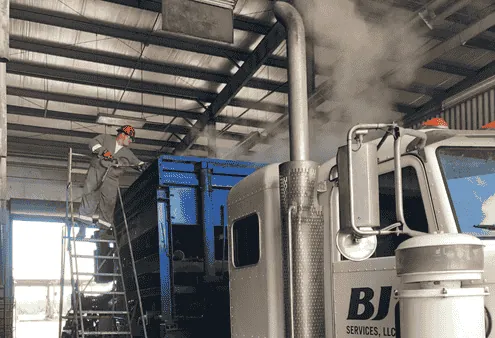
Keep your oilfield assets running clean, safe and efficient with our Equipment Cleaning services. Site Safe Solutions delivers two specialized offerings: first, pressure-washer cleaning using environmentally-friendly detergents to remove oil residue, drilling sludge and contaminants from mats, trailers, tanks and rigs. Second, we offer high-temperature, low-volume steam cleaning designed specifically for radiator systems where pressure washing could damage fins or sensitive components.
Whether you need full equipment decontamination, routine maintenance cleaning or post-job site cleanup, we have the expertise and gear to get it done safely and effectively.
How it works
- Pressure-washer cleaning with environmentally friendly detergents
- Removal of oil residue, drilling sludge and contaminants
- Mats, trailers, tanks and rigs
- High-temperature, low-volume steam cleaning for radiator systems
- Full equipment decontamination, routine maintenance cleaning and post-job site cleanup
Common questions
General information, not a compliance determination for your site.
Mats, trailers, tanks and rigs with pressure washing and environmentally friendly detergents, and radiator systems with high-temperature, low-volume steam. The work covers full equipment decontamination, routine maintenance cleaning and post-job site cleanup.
When the surface is more fragile than the build-up on it. Radiator fins are the clearest case — high-pressure water flattens them and a flattened fin passes no air. Seals, bearings and electrical enclosures are also at risk of water being driven where it should not go. Structural steel, skids and tanks take pressure washing without harm.
Because build-up hides exactly what an inspection is looking for: corrosion, cracks, weeping seals and loose fasteners. The cleaning that comes before an inspection often decides what the inspection is able to find.
Frames, tracks, skids and other structural steel take hot-water or detergent pressure washing, worked from the top down so dirt runs off surfaces that are already clean. Radiators, seals, bearings and electrical boxes get lower pressure or steam. The wash water is kept on a pad or in containment so oil residue does not run onto the ground.
Guides
All cleaning articles- Pressure Washer Safety for Oilfield Equipment Crews
- NORM in Oilfield Equipment: Scale, Sludge, Texas Rules
- How to Clean Radiator Fins on Trucks and Heavy Equipment
- Heavy Equipment Cleaning in the Oilfield: Methods
- Cooling System Maintenance for Heavy Equipment
- Portable Wash Bays: Containing Oilfield Wash Water