Naturally occurring radioactive material (NORM) in the oilfield is mostly radium. Produced water brings it up from the formation, and it concentrates in the scale and sludge that build up inside tubing, vessels, tanks and filters. Most equipment on most leases is fine. Some isn’t, and you can’t tell by looking. In Texas, the Department of State Health Services (DSHS) licenses the possession and handling of NORM. The Railroad Commission (RRC) regulates the identification of contaminated oil and gas equipment and the disposal of oil and gas NORM waste. The field rule that follows from both is simple: if equipment might carry NORM, survey it before anyone cleans, cuts, scrapes or ships it.
Where oilfield NORM comes from
The USGS fact sheet on the topic explains the chemistry. Groundwater sitting with oil for a long time picks up dissolved elements, and oilfield brines rich in chloride “enhance the solubility” of radium. When that produced water comes to the surface, changes in temperature, pressure and salinity make scale precipitate out. One of the minerals in that scale is barite (barium sulfate), “which is known to readily incorporate radium.” USGS identifies barite as “the primary host of oil-field NORM,” with the radioactivity coming from radium-226 (half-life 1,600 years) and radium-228 (half-life 5.8 years) and their decay products.
How much radium ends up in the scale depends on how much is dissolved in the water and how much water flows past the spot where barite precipitates. That’s why equipment with a long history of produced-water contact is the most likely to carry it. USGS notes that pipe, casing, fittings and tanks with “an extended history of contact with produced water” are more likely to hold radioactive deposits than other parts of the system.
The problem first surfaced in the 1980s, when scrap metal dealers began detecting radioactivity in shipments of used oilfield pipe. In a 1989 API-sponsored reconnaissance of equipment surfaces, gamma readings were above background at 42% of sites, and more than five times the median background at about 10%.
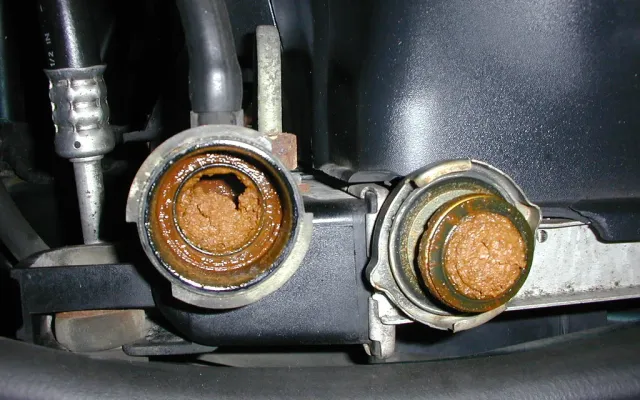
The general term in regulation is TENORM, “technologically enhanced” NORM. The radioactivity is natural, but production processes concentrate it. EPA’s RadTown page describes pipe scale as natural minerals from water that “sometimes include radionuclides.” It describes sludge as “an oily, loose material from produced water that often ends up in water storage tanks.”
Where NORM shows up on a lease
| Location | What builds up | When it matters |
|---|---|---|
| Production tubing, especially in produced-water service | Barite scale on the tubing wall | When tubing is pulled, inspected, cleaned or sent to scrap |
| Separators, heater-treaters, gun barrels | Scale and sludge in the vessel bottom | During vessel cleanouts and repairs |
| Water tanks and oil tank bottoms | Sludge from produced water | Tank cleaning and tank bottom disposal |
| Saltwater disposal lines, pumps and filters | Scale and filter residue | Filter changes, pump repair, line replacement |
| Soil around old equipment | Spilled produced water or scale cleaned onto the ground | Site cleanup, pad reclamation, pipe yard ground |
USGS also flags soil near production sites and at pipe storage yards. It can pick up NORM from produced-water spills or from scale knocked off during pipe and tank cleaning. Cleaning done carelessly can spread the problem.
The Texas rules: who regulates what
DSHS: handling, licensing and the exemption levels
Texas’s NORM licensing rule is 25 TAC §289.259. It covers anyone who extracts, processes, uses, transfers, transports or stores NORM, or recycles NORM-contaminated materials. The figures oilfield people need are:
- Oil and gas NORM waste is exempt from the chapter at 30 picocuries per gram (pCi/g) or less of radium-226 or radium-228. For soil, that’s averaged over any 100 square meters and the top 15 centimeters.
- Pipe (tubulars) and other downhole or surface equipment contaminated with NORM scale or residue is exempt if the maximum radiation exposure level doesn’t exceed 50 microroentgens per hour (µR/hr), including background, “at any accessible point.”
- Equipment above those levels “shall not be released for unrestricted use.” Decontaminating it is done only by persons specifically licensed for that work.
One provision ties straight into tubing inspection. Under §289.259, spinning pipe gauge licensees doing reclamation must either hold specific authorization for NORM decontamination or survey the tubing first. If the outside of the pipe reads above 50 µR/hr at any accessible point, they need a NORM decontamination license before removing scale. Below 50 µR/hr, they can do the scale removal without additional authorization on their license.
Railroad Commission: tagging equipment and disposal
The RRC’s oil and gas NORM rules are in 16 TAC Chapter 4, Subchapter F. They don’t replace the DSHS rules. They set requirements “for the identification of equipment contaminated with oil and gas NORM” and for disposal of oil and gas NORM waste.
- NORM-contaminated equipment is defined as equipment that, at any accessible point, reads above 50 µR/hr including background.
- Identification: operators of production or disposal equipment must mark NORM-contaminated equipment with the letters “NORM,” using a clearly visible waterproof tag or legible waterproof paint or ink (§4.605).
- Worker protection: employers whose people dispose of oil and gas NORM waste must follow the applicable DSHS radiation protection standards in 25 TAC §289.202. That includes a radiation protection program, dose control, surveys and monitoring, and posting (§4.608).
- Disposal of oil and gas NORM waste falls under the RRC. Non-oilfield NORM disposal belongs to the state environmental agency.
These rule texts are quoted from the published Texas Administrative Code. Confirm the current versions with DSHS and the RRC before relying on them for a specific job.
Stop and survey before cleaning
Here’s the field protocol that follows from those rules. It’s for crews who clean, inspect or handle used equipment.
- Ask before you start. Has this equipment been in produced-water service? Is it tagged “NORM”? Has it ever been surveyed?
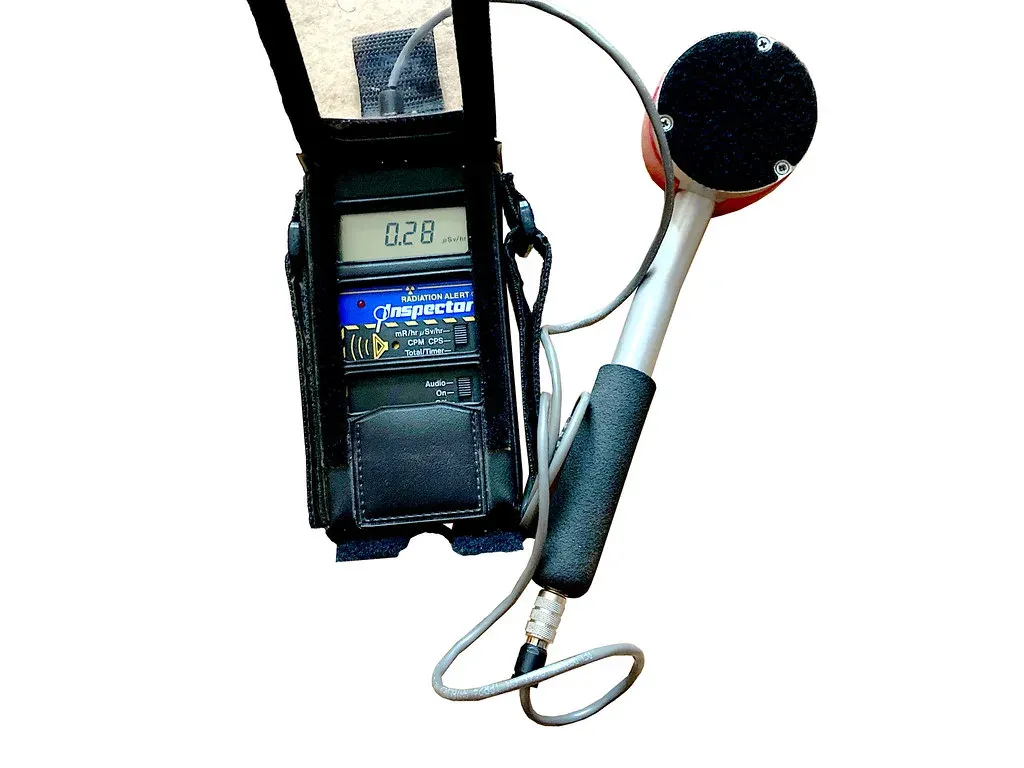
- Survey first. Have equipment that could carry NORM surveyed with a suitable instrument by someone qualified to do it, before cleaning, scraping, cutting, hot work or shipping. The Texas threshold is a reading, so the reading comes first.
- If it reads above 50 µR/hr, stop. Don’t pressure wash, steam, scrape or descale it. Decontamination of equipment above the exemption level is licensed work under 25 TAC §289.259.
- Keep scale and sludge contained. Don’t wash residue onto the pad, into a general wash-water tank or onto the ground. Scale knocked off during cleaning is one of the ways USGS says soil gets contaminated.
- Tag and segregate. Equipment that reads high gets the “NORM” marking and goes to licensed handling or disposal, not back into the yard.
- Keep the records. Survey readings, tags and disposal paperwork should follow the equipment.
EPA’s RadTown advice for the public is blunter: “Never handle, dispose of or re-use abandoned equipment used at these sites.”
Where this touches cleaning and tubing inspection
Two everyday services sit right next to NORM: equipment cleaning and tubing inspection. Both involve used equipment that may have seen produced water, and both can disturb scale. Site Safe Solutions provides equipment cleaning and EMI tubing inspection in the Permian Basin. It doesn’t survey, decontaminate or dispose of NORM. Equipment suspected of carrying NORM should be surveyed by a qualified, licensed party before any cleaning work, and anything above the Texas exemption level goes to licensed handling. If you have equipment to clean or tubing to inspect and aren’t sure of its history, raise it when you contact us, and get the survey done first.