Pressure washer safety comes down to one fact the homeowner guides skip: at the pressures used on oilfield equipment, the water jet is a cutting tool, and a puncture that looks like a pinprick is a surgical emergency. A US emergency department study counted an estimated 15,307 high-pressure injection injuries to the hand between 2012 and 2021, and pressure washers caused 90 percent of them.
What the pressure actually does
A garden hose puts out about 40 psi. Washers sold for cars and boats run 1,300 to 2,000 psi, and heavy-duty units for stripping paint run 2,700 to 4,000 psi, according to a case report in the International Journal of Emergency Medicine. Hot-water and industrial units used on rigs and trailers sit at the top of that range or above it.
Skin doesn’t hold against any of those numbers. The medical literature covers grease guns, paint sprayers and washers together because the mechanism is the same: fluid enters through a small wound, spreads along tendon sheaths and tissue planes, and keeps doing damage after the jet is gone. A 2019 multicentre study of 71 hand injection injuries in the Journal of Clinical Medicine found that 20 patients, 28 percent, ended up with an amputation. All six cases of compartment syndrome were in the group treated more than six hours after the injury. Hydraulic oil was the most common injected material, which matters on a wash pad where the surface being cleaned is covered in it.
The CDC’s page puts it plainly: wounds that appear minor can cause a person to delay treatment, increasing the risk of infection, disability or amputation. The NEISS study found pressure washer injuries had a lower infection rate than paint injuries, 3.7 percent against 23.7 percent, but there were nine times as many of them.
The rule for a crew: any skin break from the jet goes to an emergency department the same shift, with a note of what was being washed and what fluid was on it.
Which OSHA rules apply to pressure washing?
There’s no OSHA standard titled “pressure washers.” The work falls under the general standards, which are enforced.
| Standard | What it requires on a wash job |
|---|---|
| 29 CFR 1910.132(a) and (d)(1) | The employer must assess the workplace for hazards that call for PPE, select PPE that protects against them, tell each employee what was selected, and make sure it fits |
| 29 CFR 1910.133(a)(1) | Each affected employee must use “appropriate eye or face protection when exposed to eye or face hazards from flying particles, molten metal, liquid chemicals, acids or caustic liquids” |
| 29 CFR 1910.133(b)(1) | Eye and face protection must meet ANSI Z87.1 (the 2010, 2003 or 1989 editions are listed) |
| 29 CFR 1910.95(c)(1) and (i)(1) | A hearing conservation program, and hearing protectors at no cost to employees, once exposure reaches an 8-hour average of 85 dBA; Table G-16 sets 90 dBA as the 8-hour permissible level |
The eye protection rule has been tested on a pressure washer. In 2011 an Occupational Safety and Health Review Commission judge affirmed a serious citation under 1910.133(a)(1) against a sanitation contractor whose employees were pressure washing equipment without eye protection, and rejected the company’s argument that goggles created a greater hazard. OSHA had proposed $5,000; the judge assessed $2,000. The decision binds only that employer, but it shows how OSHA reads the standard: spray-back from a pressure washer is flying particles and liquid.
Noise is the one crews ignore. Washers run alongside the equipment being cleaned, often in a steel bay that reflects sound. If a wash crew’s full shift is on the machine, the 85 dBA action level is a realistic concern, and the employer has to measure it rather than guess.
PPE that fits the job
The homeowner lists and the manufacturer’s guidance say goggles and closed-toe shoes. For a crew that’s the floor.
- Eye and face. ANSI Z87.1-marked goggles, or a face shield over safety glasses when stripping heavy build-up. Shields catch the chips of mud and scale that come back at head height.
- Hands. Gloves don’t stop the jet. They stop cuts from sharp steel and contact with the detergent. Keep the free hand on the wand, never in front of the nozzle.
- Feet. Waterproof boots with a sole that grips on a slick pad, and the jet kept off your own feet.
- Hearing. Plugs or muffs when the washer and the engine of the unit being washed are both running.
- Rain gear or a waterproof suit on hot-water units, and one the operator will keep on in July.
The hazard assessment under 1910.132(d) is where the employer writes down which of these applies to which task. A frac pump deck full of grease is a different assessment from a mat yard.
Hot water, steam and burns
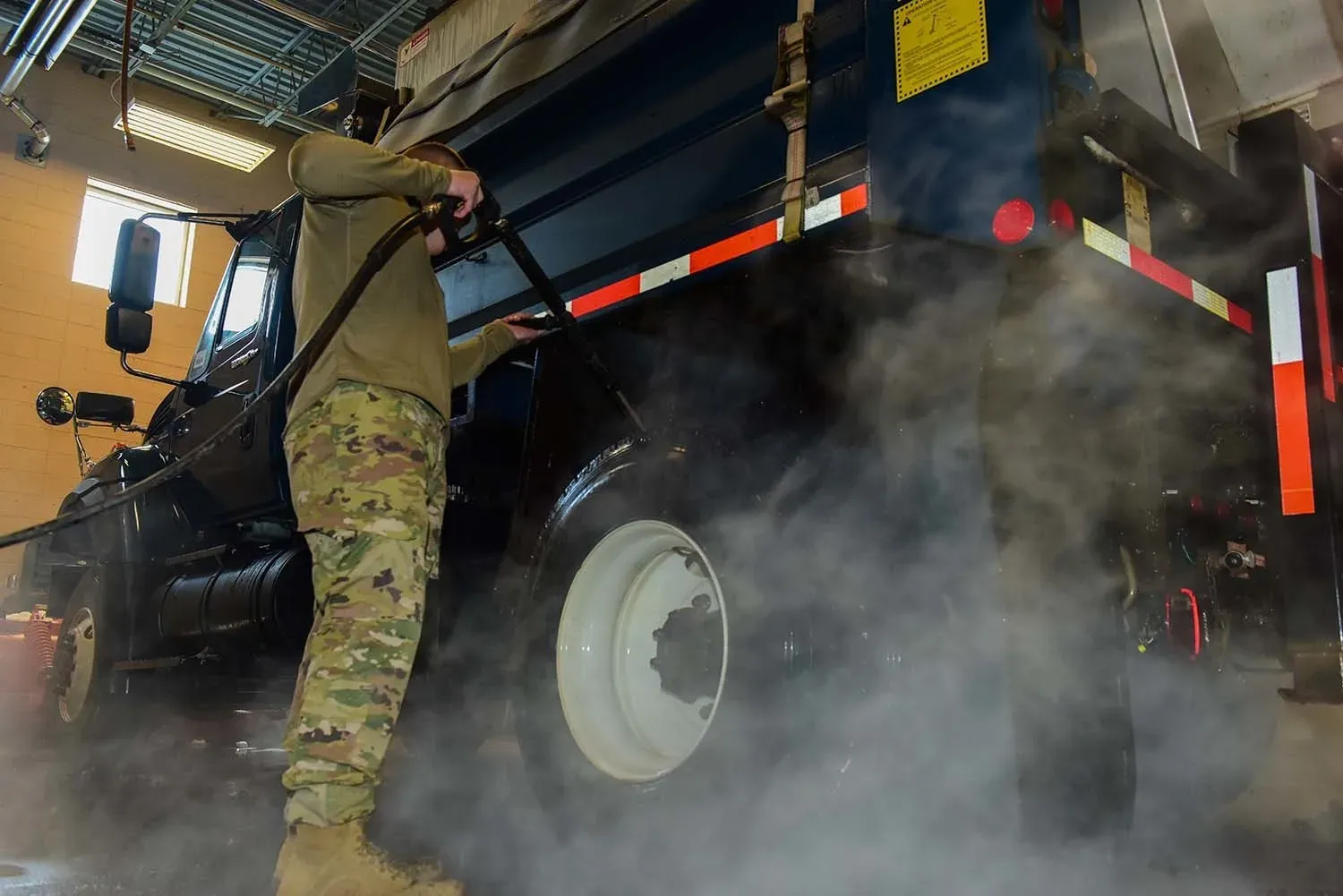
Oilfield wash units run hot because grease and drilling sludge don’t move with cold water. Spray-back from a hot-water wand burns exposed skin, the fog hides the hose, the drain and the edge of the pad, and a fitting that lets go dumps near-boiling water on whoever is holding the hose.
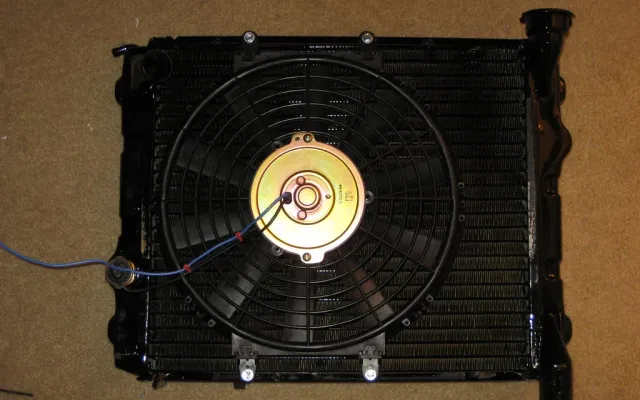
The steam used on radiators is high temperature and low volume, so there’s less water on the ground and the risk is contact rather than impact. See steam versus pressure washing for when each is the right tool. On either unit the wand and quick-connects are hot, and the burner stays hot after shutdown.
The hose is a line of fire
A pressure washer hose carries the same hazard as any pressurized line on location, scaled down. If a crimp fails or a quick-connect lets go under pressure, the loose end whips. The CDC warns against pointing the washer at anyone, but says nothing about the hose. For a crew, the hose rules are the ones used on air lines:
- Inspect the hose before every start for cuts, bulges, kinks and crushed sections. A hose a truck has driven over is done.
- Check that fittings are seated and the collar is locked before the pump starts.
- Keep the hose out of walkways and off hot exhaust.
- Fit whip restraints across connections on long runs and at the unit’s discharge. See the whip check guide for sizing.
- Never tighten or repair a fitting while the system is pressurized.
- Keep the trigger lock on when the wand is down, and squeeze the trigger after shutdown to bleed pressure before disconnecting hoses or nozzles, as the manufacturer guidance says.
The nozzle is a control too. A zero-degree tip puts the full output in a pencil jet. Crews reach for it because it cuts build-up faster, and it cuts people faster.
Engines, electricity and the bay
The CDC’s two other warnings apply to oilfield wash bays. Gasoline-powered washers produce carbon monoxide, and the CDC says never to use one in an enclosed space or less than 20 feet from any window, door or vent. A portable gas unit in a shop bay with the door half down is a common setup and a bad one.
Electric units carry a shock risk in the wettest workplace on the lease. The CDC’s checklist: test the ground fault circuit interrupter before use, plug into a grounded receptacle, keep cord connections out of standing water, use a heavy-duty cord rated for wet locations, and never cut or splice a cord or remove the grounding prong.
Where the water goes
The oilfield adds a hazard no homeowner page covers: the wash water. Spray-back from a frac pump or a rig floor carries oil, sludge and whatever chemical was on the equipment, and a wash pad that drains to caliche is a spill in slow motion. Wash on a lined pad or inside a portable wash bay with a sump, then pump the water out for disposal. See portable wash bays. A contained pad also fixes the footing, because the water goes to a sump instead of standing where the operator walks.
Pre-job checklist for a wash crew
- Hazard assessment on file for this task, naming the PPE (1910.132(d))
- Z87.1 goggles or face shield, gloves, gripping waterproof boots and hearing protection on every operator
- Hose inspected end to end, fittings seated and locked, restraints on long runs
- Nozzle chosen for the surface, not the fastest one on the ring
- Gas unit outside, at least 20 feet from doors, windows and vents; electric unit on a tested GFCI
- Hot-water unit: rain gear on and an exclusion zone around the operator
- Wash water contained on a lined pad or in a wash bay
- Every operator knows that a skin break from the jet means the emergency department that shift
Equipment cleaning crews in the Permian Basin
Site Safe Solutions runs equipment cleaning for oilfield operators in the Permian Basin and West Texas: pressure washing of mats, trailers, tanks and rigs with environmentally friendly detergents, high-temperature low-volume steam for radiators, and post-job site cleanup. If you’d rather hand the wash job to a crew that does it every day, tell us what needs cleaning and what’s on it.