On an oilfield location, secondary containment requirements come mainly from EPA’s SPCC rule (40 CFR Part 112), which sets the volume for oil tanks and vessels. OSHA’s flammable liquids standard adds a fire-protection dike rule for some tanks. In Texas, the Railroad Commission’s Chapter 4 waste rules govern containment at permitted waste facilities and pollution everywhere else. Which one applies depends on the equipment and what’s in it, so this guide goes piece by piece.
It doesn’t cover whether your facility is under SPCC in the first place. That’s the threshold question in does my site need secondary containment. Start there if you haven’t answered it.
Which rule applies, by equipment
| Equipment | Federal oil rule (EPA SPCC) | OSHA 1910.106 | Hazardous waste (RCRA) | Texas RRC |
|---|---|---|---|---|
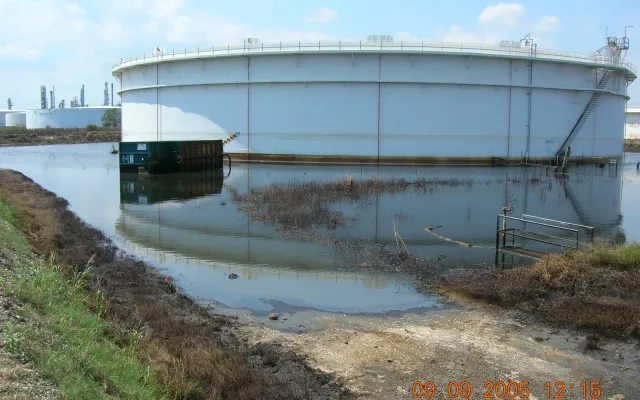
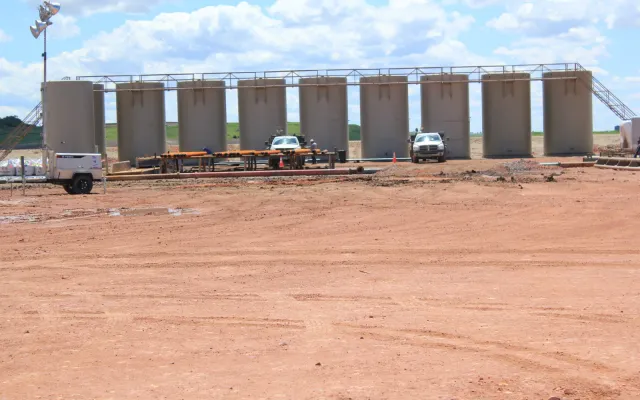
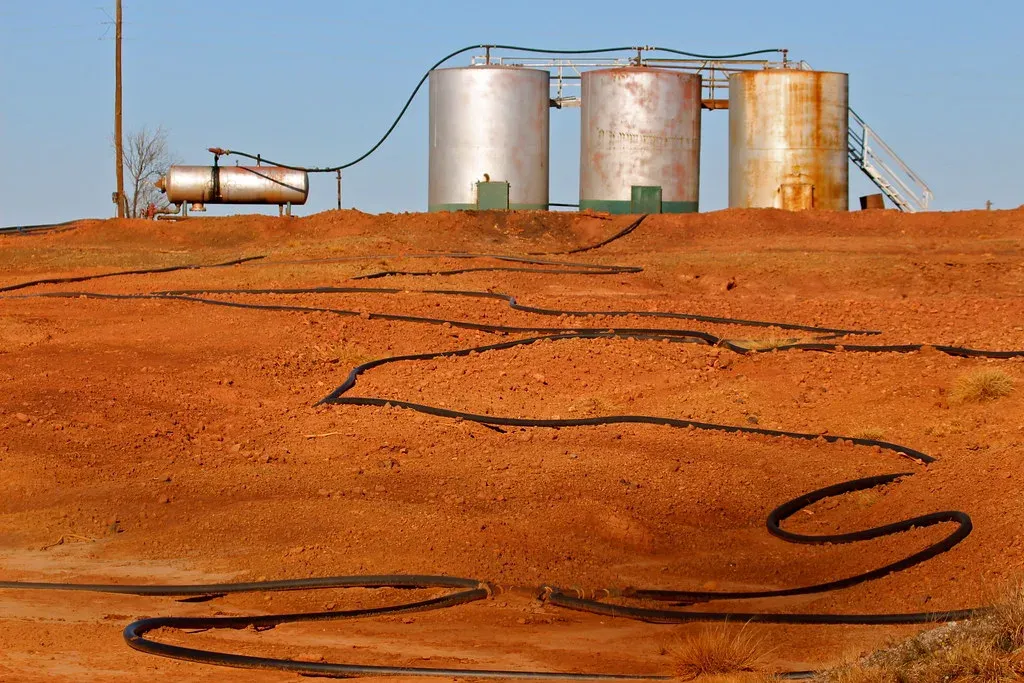
| Crude and condensate tanks at a tank battery | 112.9(c)(2): largest single container plus sufficient freeboard for rain | Tanks storing liquids in its scope need drainage or a dike holding at least the largest tank | Not applicable to oil product | Pollution prohibited (§4.101). Spills: Rule 20 notice, Rule 91 cleanup |
| Separators, heater-treaters (flow-through process vessels) | Sized containment, or the inspect-and-repair alternative in 112.9(c)(5) | Depends on contents and setup | Not applicable | Same as above |
| Produced water tanks | 112.9(c)(2), or the skimming alternative in 112.9(c)(6) with PE certification and records | Usually outside scope unless the contents qualify as flammable | Excluded: E&P wastes aren’t hazardous waste (40 CFR 261.4(b)(5)) | Oil and gas waste under Chapter 4 |
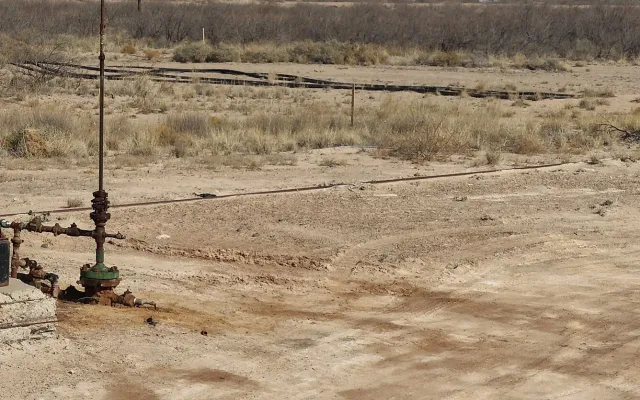
| Flowlines and intra-facility gathering lines | Either containment under 112.7(c), or a contingency plan, a written commitment of manpower and equipment, and a maintenance program under 112.9(d) | Not applicable | Not applicable | Leaks fall under Rules 20 and 91 |
| Drilling and workover rig fuel, oily mud | 112.10(c): catchment basins or diversion structures, plus 112.7(c) general containment | Fuel tanks in scope | E&P wastes excluded | Chapter 4 for drilling waste and pits |
| Frac tanks and portable oil containers (non-production facility) | 112.8(c)(11): largest compartment or container plus freeboard | If contents are in scope | Not applicable to oil | Chapter 4 if the contents are oil and gas waste |
| Yard bulk fuel or lube tanks (non-production) | 112.8(c)(2): largest container plus freeboard, diked areas sufficiently impervious | Drainage or dike, at least the largest tank | Not applicable | Not applicable unless under RRC jurisdiction |
| Shop hazardous waste drums and tanks (not E&P waste) | Only if they hold oil | Only if flammable | Containers: 10% of total or 100% of largest (264.175). Tanks: 100% of largest plus 25-year, 24-hour rain if run-on can enter (265.193) | Not applicable |
| Permitted RRC waste facility tanks (commercial disposal, recycling, treating) | If they store oil, SPCC too | If in scope | E&P waste excluded | §4.128(b)(3): containment required for all aboveground tanks |
Read across a row and you’ll often find two or three rules stacked on the same tank. They don’t cancel each other. You meet the strictest number that applies.
What EPA’s SPCC rule asks for
The SPCC rule does most of the work on an oil lease. It has two tiers:
- General containment, 112.7(c). Required across the facility. The system has to hold oil, “including walls and floor,” until cleanup, and you size it for “the typical failure mode, and the most likely quantity of oil that would be discharged.” Berms, curbing, drip pans, sumps, diversion ponds and sorbents are all on the list.
- Sized containment. Required for specific equipment: tank batteries and separation and treating installations under 112.9(c)(2), bulk storage under 112.8(c)(2), and mobile or portable containers under 112.8(c)(11). Each one says the entire capacity of the largest single container plus sufficient freeboard to contain precipitation.
EPA’s guidance adds that permanently manifolded tanks count as one container, and that you don’t need a separate system for every tank. A common containment area works when it’s sized for the largest container. Production facilities also have a drainage rule in 112.9(b)(1): dike drains at tank batteries stay closed and sealed except while you drain uncontaminated rainwater after inspecting it.
What OSHA actually requires
OSHA has no general secondary containment mandate. The piece people mean is 29 CFR 1910.106(b)(2)(vii), and it’s a fire rule. It covers aboveground tanks storing flammable liquids within the standard’s scope, which is liquids with a flashpoint at or below 199.4 °F. The area around those tanks must either drain to vacant land or an impounding basin no smaller than the largest tank, or be diked. A dike must hold “the greatest amount of liquid that can be released from the largest tank within the diked area, assuming a full tank,” after deducting the other tanks’ volume below the dike height.
The same paragraph says dike walls must be earth, steel, concrete or solid masonry designed to be liquidtight. It also limits the average wall height to 6 feet above interior grade, and requires earthen walls 3 feet or taller to have a flat top at least 2 feet wide. OSHA’s capacity is 100% of the largest tank, with no rain freeboard. Its purpose is keeping burning liquid away from other tanks and neighbors.
Where RCRA fits, and where it doesn’t
The 10% rule that shows up on chemical-supply websites comes from hazardous waste container storage, 40 CFR 264.175: containment for 10% of the containers’ total volume or 100% of the largest, whichever is greater. Hazardous waste tank systems under 265.193 need liners that hold 100% of the largest tank, plus capacity for a 25-year, 24-hour rainfall if run-on can get in.
Neither applies to most of what’s on a lease. Federal rules exclude “drilling fluids, produced waters, and other wastes associated with the exploration, development, or production of crude oil, natural gas” from hazardous waste (40 CFR 261.4(b)(5)). RCRA containment comes into play at the yard or shop, for things like spent solvents that aren’t E&P waste.
Texas RRC: Chapter 4 and Rules 20 and 91
On July 1, 2025, the Railroad Commission replaced Statewide Rule 8 (§3.8) and §3.57 with 16 TAC Chapter 4, Subchapter A, Oil and Gas Waste Management. Three parts of it matter for containment:
- §4.101(a): no one conducting RRC-regulated activities may “cause or allow pollution of surface or subsurface water in the state.” That applies everywhere, permitted or not, and it’s why a release that never reaches a creek can still be a problem.
- §4.128(b)(3), permitted waste management operations: “Secondary containment shall be provided for all above-ground storage tanks.” The rule recommends at least 120% of total storage capacity. It accepts the largest tank’s maximum capacity plus two feet of freeboard plus the volume of a 25-year, 24-hour rainfall. Earthen dikes around pits and perimeter berms at these facilities must be compacted to 95% Standard Proctor or 90 to 92% Modified Proctor, with a permeability of 1 × 10⁻⁷ cm/sec or less.
- §4.129(b)(4), same facilities: any spill must be collected and containerized within 24 hours.
The 120% figure is a recommendation for permitted waste facilities. It isn’t a lease-wide mandate for every tank battery, and you’ll hear it misquoted that way.
Statewide Rule 91 (16 TAC §3.91) is still in force. It was amended effective July 1, 2025, alongside Chapter 4, and Chapter 4 §4.103(a)(2) recognizes cleanup “as authorized by §3.91.” Rule 91 covers soil contaminated by crude oil spills in non-sensitive areas:
- Free oil must be removed immediately.
- Soil above 1.0% TPH by weight must be delineated and excavated, with the final 1.0% TPH level reached as soon as technically feasible and no later than one year after the spill.
- Spills of more than 5 barrels of crude require Form H-8. Spills of more than 25 barrels also require a final report with sample analyses.
Rule 20 (§3.20) requires immediate notice of a fire, leak, spill or break to the district office. Oil losses become reportable when they exceed five barrels in the aggregate.
Containment is how you avoid the Rule 91 work. Oil caught on a liner gets pumped out. Oil on caliche becomes a soil job with a one-year deadline.
Myths worth correcting
- “OSHA requires 110%.” It doesn’t. OSHA’s dike rule is 100% of the largest tank, and only for flammable liquid storage in its scope.
- “Federal law says 110%.” The SPCC rule text says the largest container plus “sufficient freeboard.” EPA’s guidance calls 110% an acceptable rule of thumb in many cases and says it may fall short in a big storm.
- “Containment must hold 10% of everything.” That’s the RCRA hazardous waste container rule. It doesn’t govern oil tanks or E&P waste.
- “Texas requires 120% on every tank.” It’s a recommendation for permitted waste facilities under §4.128.
Building to the right number
Once you know which rule sets the volume, the build is the same problem everywhere: hold that volume on your footprint, keep it liquid-tight, and keep the trucks from wrecking it. Site Safe Solutions designs and installs containment systems for Permian Basin sites, including modular drive-over containment, lined primary pads and high-wall systems, and supplies Fast Mats for transfer points. We don’t write SPCC Plans, but if you have the volumes from yours, send them over and we’ll talk through what fits.