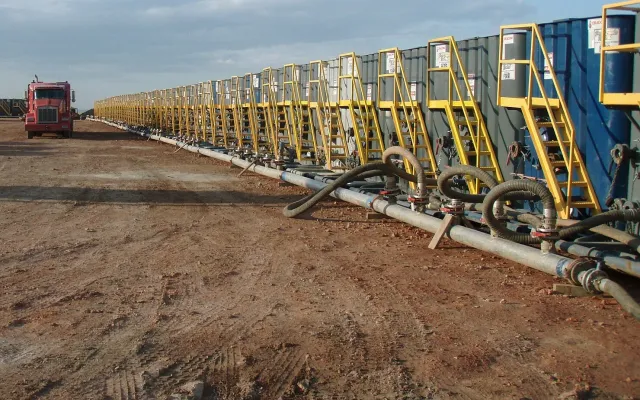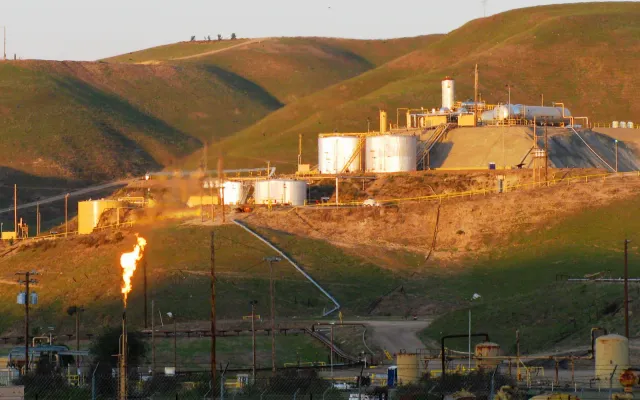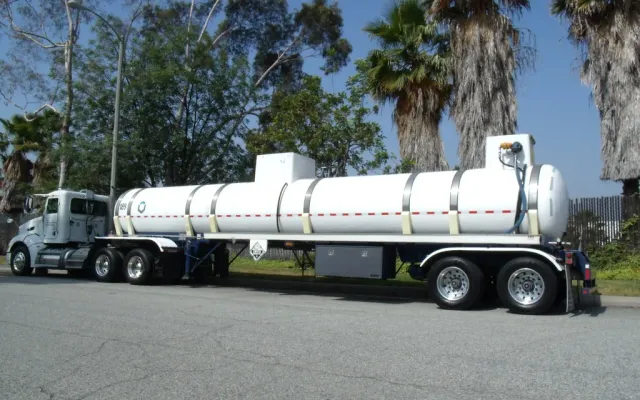
A containment liner on an oilfield pad is usually a 40 or 60 mil HDPE geomembrane. Its seams are thermally welded and tested, it sits on a cushion over a graded subgrade, and it is anchored at the berm walls. The material name on the quote matters less than four things you can actually check: the resin spec the sheet is made to, how thick it really is, how every seam was welded and tested, and what’s under it. Get those right and the liner does its job. Get one wrong and the containment fails at that spot, usually the first time it’s needed.
This guide is for the person writing or approving the liner spec on a tank battery, frac pad or production location. If you’re still deciding whether the site needs containment at all, start with does my site need secondary containment.
What the rule actually asks a containment liner to do
The federal SPCC rule doesn’t name a liner material or a thickness. Under 40 CFR 112.7(c), the containment system “including walls and floor” has to be “capable of containing oil” and built so that a discharge “will not escape the containment system before cleanup occurs.”
EPA’s inspector guidance spells out what that means. The rule sets no permeability, hydraulic conductivity or retention-time number. “Sufficiently impervious” doesn’t mean impervious forever. It means the containment holds oil long enough for you to clean it up before it reaches water. The certifying PE decides how to meet that and documents it in the SPCC Plan.
Two lines from that same guidance matter for liners:
- The owner “should monitor the conditions of the secondary containment structure to ensure that it remains impervious to oil.”
- Repairs of “excavations or other penetrations through secondary containment” have to follow good engineering practice.
So the liner is judged on whether it’s still intact, not on what it was when it was installed. EPA also tells inspectors what failure looks like at production sites: oil stains or white salt crystal deposits on the outside of berm walls. That’s produced water and oil that went through the containment instead of staying in it.
40 mil or 60 mil HDPE?
Most oilfield containment liners are HDPE made to GRI-GM13, the Geosynthetic Institute specification for HDPE geomembranes (Revision 16, March 2021). It covers sheet from 30 to 120 mil with a formulated density of at least 0.940 g/cc. Ask for GM13 by name on the quote. It’s the easiest way to tell a liner-grade sheet from generic plastic.
Here’s how the two common thicknesses compare on GM13’s minimum average values for smooth sheet:
| GRI-GM13 property (smooth HDPE) | 40 mil | 60 mil |
|---|---|---|
| Puncture resistance (ASTM D4833) | 72 lb | 108 lb |
| Tear resistance (ASTM D1004) | 28 lb | 42 lb |
| Yield strength | 84 lb/in | 126 lb/in |
| Break strength | 152 lb/in | 228 lb/in |
| Carbon black content | 2.0–3.0% | 2.0–3.0% |
| Stress crack resistance (ASTM D5397) | 500 hr | 500 hr |
The 60 mil sheet gives you 50% more puncture and tear resistance. On a pad where tank skids sit on the liner, where crews walk it in boots, and where caliche and rock can work up from underneath, that margin is real. A 40 mil liner can be the right call for a short-term frac pad on a well-prepared, smooth subgrade with a good cushion. For a producing tank battery that will sit for years, most people who’ve replaced a punctured liner go thicker.
Check thickness, not just the label. GM13 lets the lowest of ten individual readings on smooth sheet fall 10% below nominal, while the average has to meet nominal. A cheap way to lose that margin is a sheet that was never GM13 to begin with.
Seams: where liners usually fail
The sheet is made in a factory under controlled conditions. The seams are made on your location, in wind and dust, by whoever showed up. That’s why the seam spec and the seam testing matter more than the sheet.
GRI-GM19a, the seam specification for HDPE, LLDPE and flexible polypropylene, focuses on two thermal methods: hot wedge (single or dual track) and extrusion fillet. Here’s how they compare:
| Seam method | How it’s made | How it’s tested in the field | Where it belongs |
|---|---|---|---|
| Dual-track hot wedge | A heated wedge runs between two overlapped sheets and melts both. Rollers press them into two parallel bond tracks with an air channel between | The air channel is pressurized and watched for a pressure drop. That tests both tracks without cutting anything | Long straight panel seams. GRI-GM29 calls it “the premier technique for making geomembrane seams” |
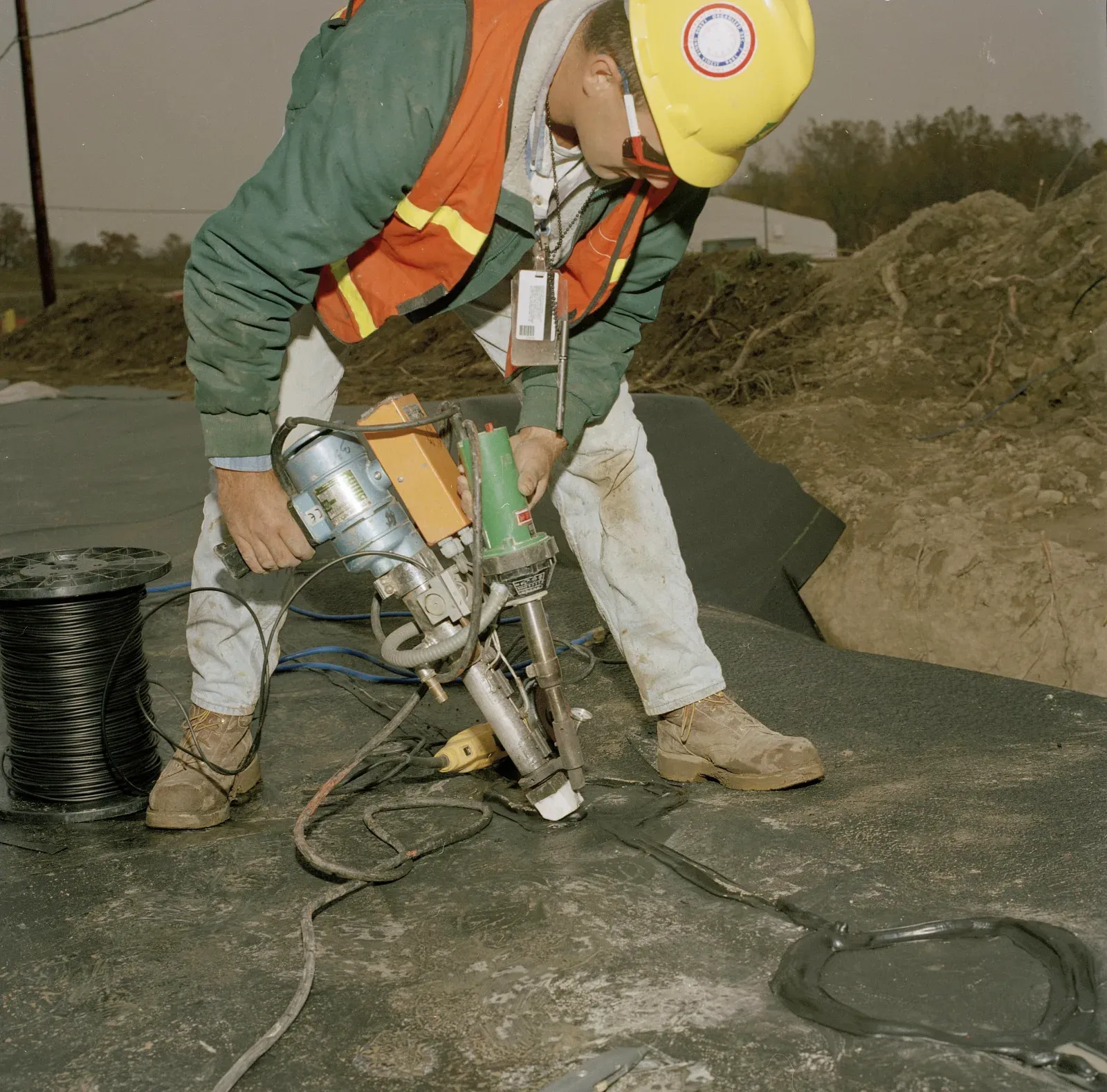
| Extrusion fillet | Molten resin is extruded along the edge of the overlap. The surfaces have to be ground first | Vacuum box over the seam with soapy solution, looking for bubbles | Patches, T-joints, pipe boots, corners, repairs |
| Hot air | High-temperature air melts the surfaces, then pressure joins them | Usually vacuum box or air lance | Tacking, small details |
GM29 is blunt about extrusion welds. It calls them “clearly an inferior weld to the hot wedge method.” It also says grinding has to be done “with great care so as to avoid thinning of the sheets.” Vacuum box testing of extrusion welds is “quite subjective and qualitative.” None of that means you avoid extrusion welds. Every pipe penetration and patch needs one. It means you want as few as possible, and you want them done by someone who does a lot of them.
Destructive testing is the other half. A sample is cut from a seam and pulled in shear and peel. GRI’s guidance notes the traditional rate is one destructive sample per 500 feet of seam. On a containment pad that might mean a handful of samples, or none if the seams are short. Ask what the installer does instead: a trial weld at the start of each shift, and air testing on every dual-track seam, at a minimum.
Subgrade: what’s under the liner on a caliche pad
Most punctures start below the liner, not above it. A Permian pad is often compacted caliche with rock, and the caliche keeps working. Under the weight of a loaded tank a sharp stone will push through 40 mil over time, and often through 60.
What a good crew does before any liner goes down:
- Grades the floor so it drains to one low point where rainwater can be checked and removed.
- Picks or rakes out rock and roots, and rolls the surface smooth.
- Lays a nonwoven geotextile cushion under the liner, and a second layer or a wear sheet where tank skids and stairs sit.
- Cuts an anchor trench at the top of each berm, or fixes the liner to the wall system, so wind can’t get under an empty liner and lift it.
Skip the cushion to save money and you’ll usually pay for it later in patches and a contaminated subgrade.
Penetrations and wear lanes
Every pipe that goes through the liner is a weak point. Use a prefabricated boot, extrusion-welded to the liner and clamped to the pipe. Better still, route lines over the berm wall instead of through it, and keep penetrations off the low point where liquid collects.
Where trucks or equipment have to cross, a bare liner won’t last. Use a drive-over section, a protective mat or a sacrificial wear layer in the traffic lane. If vehicles cross daily, look at drive-over containment or Fast Mats for that part of the pad instead of a liner alone.
Sun exposure, in one paragraph
Exposed HDPE in West Texas sun does age. That’s why GM13 requires 2–3% carbon black and a UV-resistance test that measures how much antioxidant is left after 1,600 hours of lab exposure. In a 2021 lab study published in Membranes, a 1.0 mm HDPE geomembrane lost about 30% of its tensile properties after 8,760 hours of fluorescent UV exposure. The practical takeaway is to inspect exposed liners for brittleness and cracking at folds and seams, and not to assume a service life in years.
Spec sheet to hand a containment contractor
Copy this into your request for quote:
- Material: HDPE geomembrane manufactured to GRI-GM13 (current revision). Provide the manufacturer’s QC certificates for the rolls supplied.
- Thickness: 60 mil, unless the site is temporary with a smooth, cushioned subgrade (state which).
- Subgrade: graded to drain to a single sump point, rock and debris removed, rolled smooth.
- Cushion: nonwoven geotextile under the full liner, double layer or wear sheet under tank skids, stairs and pump skids.
- Seams: dual-track hot wedge for panel seams, air-channel tested. Extrusion welds only at details, vacuum-box tested. Trial welds each shift. Seam properties to GRI-GM19a.
- Penetrations: prefabricated boots, extrusion-welded and clamped. No penetrations at the low point.
- Anchoring: anchor trench or wall attachment along the full perimeter.
- Traffic: wear lanes or drive-over sections where vehicles cross.
- Documentation: panel layout drawing, seam log, test results and repair locations, kept with the SPCC Plan records.
A contractor who can fill all of that in without hesitating has done it before.
Getting a liner installed
Site Safe Solutions installs containment systems across the Permian Basin. The work includes primary containment pads, high-wall and modular drive-over systems, and HDPE liners specified to the site and installed by factory-trained crews. If you’re scoping a new pad or replacing a liner that’s past it, send the location, the largest tank size and whether trucks need to cross, and we’ll work through the spec with you.