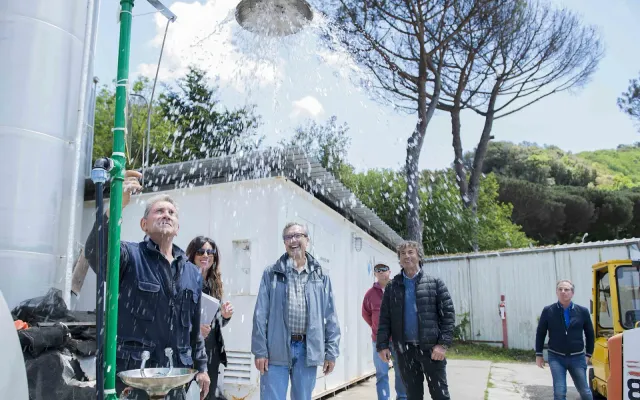
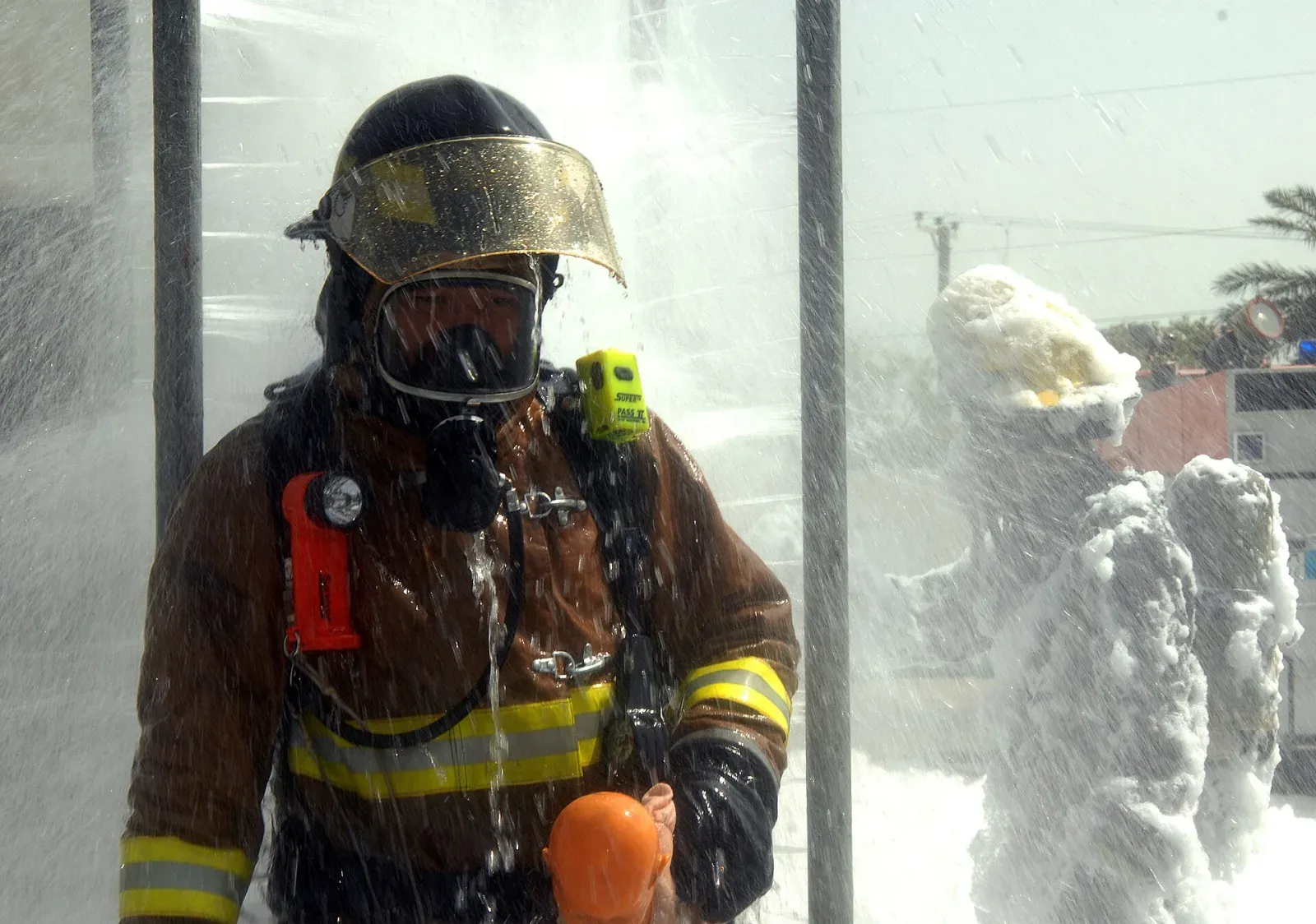
A decontamination shower washes a hazardous substance off a person, and often off their protective gear, before they leave a contaminated area. An emergency shower does a narrower job. It drenches a worker who has just been splashed with something corrosive, as first aid, in the first seconds. The two get mixed up all the time, and they fall under different standards: ANSI/ISEA 113 covers decontamination showers, and ANSI/ISEA Z358.1 covers workplace emergency showers. On most oilfield locations the legal driver is OSHA’s first aid rule, which calls for quick drenching wherever corrosives are handled. A full decon setup comes in when a crew is working a spill or other hazardous material and the job needs a decontamination procedure.
Decontamination shower vs emergency shower
| Emergency (drench) shower | Decontamination shower | |
|---|---|---|
| Job it does | First aid for a chemical splash on the body | Removes contamination from people (and gear) leaving a contaminated area |
| Consensus standard | ANSI/ISEA Z358.1 | ANSI/ISEA 113-2013, Fixed and Portable Decontamination Shower Units |
| Written for | Workplaces where corrosives are handled | First responders and receiving medical facilities |
| Water temperature | Tepid, 60-100°F | Tepid, 60-100°F |
| Run time | Unit must be able to deliver flushing fluid for 15 minutes | Set by the decon procedure |
| Privacy | Not part of the standard; many units are open | Units usually give each person private undress, shower, rinse and redress areas |
| Runoff | Flushing water has to go somewhere | ANSI/ISEA 113 doesn’t address disposal of the waste water |
The ANSI blog summary of ANSI/ISEA 113 says the standard covers noncorrosive construction, shower head placement, water pressure and the tepid 60-100°F range, and that it is “intended for use by first responders and receiving medical facilities.” For workplace emergency showers it sends readers to Z358.1. The ISEA, which writes both standards, says Z358.1 units must be able to deliver flushing fluid for 15 minutes, at a tepid temperature, and be reachable within 10 seconds of a potential exposure.
On a lease, then, the shower trailer parked near the acid tanks is an emergency shower. The tented line set up at the edge of a spill cleanup is a decontamination line. A trailer can do both jobs if it holds enough tepid water and catches what runs off.
What OSHA requires on an oilfield location
The baseline is 29 CFR 1910.151(c): “Where the eyes or body of any person may be exposed to injurious corrosive materials, suitable facilities for quick drenching or flushing of the eyes and body shall be provided within the work area for immediate emergency use.”
That rule doesn’t say “decontamination shower.” It says quick drenching, in the work area, for immediate use. Corrosives are routine on oilfield locations. When EPA analyzed FracFocus disclosures for wells fractured between January 2011 and February 2013, hydrochloric acid showed up as an additive in 65% of them. Acid trucks, acid tanks and the transfer hoses between them are the usual reason a location needs a drench shower on hand.
The detailed rules for when a shower has to be on location, and how much water it carries, are covered in our ANSI Z358.1 guide for oilfield locations. Decontamination is the step after the drench.
Where HAZWOPER decontamination comes in
OSHA’s hazardous waste operations and emergency response standard, 29 CFR 1910.120, has the most detailed federal text on decontamination. Whether a given spill job falls under it depends on the material and the type of work, so that call belongs to your HSE department. When it does apply, paragraph (k) asks for a written process:
- A decontamination procedure has to be developed, communicated to employees and implemented before anyone enters an area where exposure to hazardous substances is possible.
- Everyone leaving a contaminated area has to be appropriately decontaminated. Contaminated clothing and equipment leaving the area have to be disposed of or decontaminated.
- Decon has to happen where it minimizes exposure of clean workers and equipment to contaminated ones.
- Equipment and solvents used for decon have to be decontaminated or disposed of properly.
- A worker whose non-impermeable clothing gets wet with a hazardous substance has to remove that clothing right away and go to a shower. The clothing stays in the work zone until it’s disposed of or decontaminated.
- Where the decon procedure calls for regular showers and change rooms outside the contaminated area, they have to meet 29 CFR 1910.141. If temperature conditions prevent using water effectively, other effective means of cleansing have to be provided.
In West Texas that clause applies in both seasons. A shower trailer that froze overnight in January doesn’t count as an effective means of cleansing, and neither does one whose tank has been cooking in August sun.
The first minutes after a splash
An acid splash calls for flushing first and decontamination after, and crews sometimes get the order backwards. The ILO-WHO International Chemical Safety Card for hydrogen chloride (ICSC 0163), the compound that hydrochloric acid is a solution of, gives this first aid for skin contact: “First rinse with plenty of water for at least 15 minutes, then remove contaminated clothes and rinse again. Refer immediately for medical attention.”
In practice:
- Get the worker under the drench shower right away. Seconds count with corrosives.
- Flush. Fifteen minutes feels long while you’re standing there, so have someone time it.
- Get contaminated clothing off. A soaked shirt keeps acid on the skin. The privacy of an enclosed trailer helps here, because people hesitate to strip in the open on a busy pad.
- Rinse again.
- Get medical help. The product’s safety data sheet governs the specifics, so keep it where the shower is.
Whoever handles the first aid needs gloves. The same ICSC entry tells responders to wear protective gloves while giving first aid.
Portable decontamination showers on a lease
Most well sites don’t have plumbed water, so any shower on location is portable. The options run from pop-up or inflatable decon shelters built for first responders to enclosed shower trailers. Before one goes on location, check:
- Water supply: how much clean water it carries and how long that lasts at its flow rate. A drench shower has to be able to run 15 minutes, and a decon line may have several people to rinse.
- Temperature: both standards call for tepid water, 60-100°F. Ask how the unit keeps its tank in that range in a Permian summer and a hard freeze.
- Runoff: the water coming off a contaminated worker carries the contaminant. ANSI/ISEA 113 leaves disposal of waste flushing fluid open. Water that runs onto the pad spreads the spill. A unit with its own waste tank, or a shower set on a lined containment area, keeps it captured.
- Privacy: an enclosed unit lets a worker get contaminated clothes off fast.
- Placement: Z358.1 asks for emergency showers within 10 seconds of the hazard. A decon line belongs at the boundary of the contaminated area, on the route out.
Setting up a decon line for a spill job
A decon line on a spill cleanup can be simple. It has to follow the order in your written procedure. The general pattern, based on the 1910.120(k) requirements above:
- Put it at the edge of the contaminated zone, where workers exit, away from the clean area and the break trailer.
- Lay a liner or set the stations inside containment so rinse water and drips stay captured.
- Rinse gross contamination off boots and gloves before anything comes off.
- Remove outer PPE into labeled bags or drums. It stays in the work zone until it’s decontaminated or disposed of.
- Shower, then dress in clean clothes on the clean side.
- Treat brushes, buckets and solvents used in the line as contaminated waste too.
Rinse water from a crude oil or produced water spill is part of the spill. Handle it like the rest of the recovered fluid, and check with your environmental group about where it goes.
Pre-job check
- Does the job involve corrosives? If yes, a drench shower must be in the work area under 1910.151(c).
- Is there a written decon procedure for the job, and does the crew know it before entry?
- Is the shower within 10 seconds of the hazard, with a clear path?
- Is the water tepid today, given the weather?
- Is there enough water for 15 minutes of flushing?
- Where does the runoff go?
- Are SDSs for the chemicals on location at the shower?
- Are bags or drums staged for contaminated clothing?
Emergency shower trailers from Site Safe Solutions
Site Safe Solutions rents emergency shower trailers for oilfield locations. The trailers are self-contained, so no extra containment is needed. They’re delivered and rigged up on location and maintained on site during the rental, and the rental model suits long jobs. If a spill job needs containment under the work, the company also installs secondary containment liners and berms. To get a trailer on your location, tell us the lease, the chemicals on site and how long you need it.