Produced water is the salty water that comes up out of the formation with oil and gas. In the Permian Basin there’s far more of it than oil, and it’s far saltier than seawater. When it spills, it doesn’t break down the way crude can. The salt stays in the soil until it’s leached out or dug up, and in the meantime the ground won’t grow anything. That makes a produced water spill on a lease a different problem from an oil spill. In some ways it’s a harder one.
This article covers how much produced water moves through the Permian, what it does to soil, how the federal SPCC rule treats produced-water tanks, and where containment does the most good.
What produced water is
The American Geosciences Institute defines produced water as “naturally occurring water that comes out of the ground along with oil and gas.” Most oil- and gas-bearing rocks also hold water, and it comes up with the hydrocarbons. On fractured wells some of the frac fluid comes back too, which is usually called flowback.
What’s in it depends on the rock. AGI lists salts, oil residues, sand or mud, naturally occurring radioactive material, frac chemicals, bacteria and dissolved organics among the possible constituents. In practice, on a Permian lease, “produced water,” “saltwater” and “brine” usually mean the same stream.
How much produced water the Permian handles
The volumes are large, and the sources use different boundaries, so read the numbers carefully:
- The UT Bureau of Economic Geology puts produced water across the Permian Basin at roughly 21 million barrels per day in 2025. That’s about a billion gallons a day.
- The Texas Produced Water Consortium’s 2024 report, as summarized by the Texas Living Waters Project, estimated about 12 million barrels per day from the Texas side of the Permian, with a projection of up to 15 million.
- The Bureau of Economic Geology gives water-to-oil ratios of about 2.6 barrels of water per barrel of oil in the Midland Basin and about 5 in the Delaware Basin.
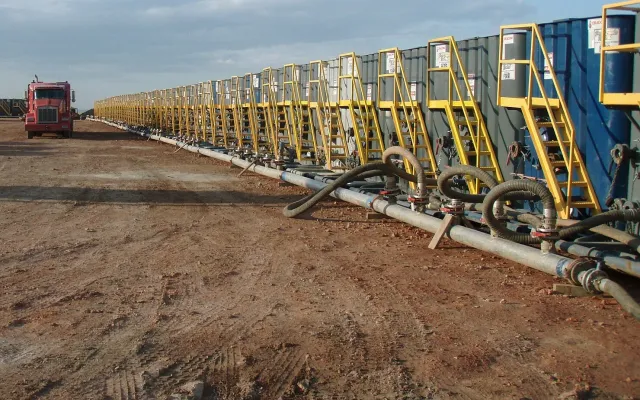
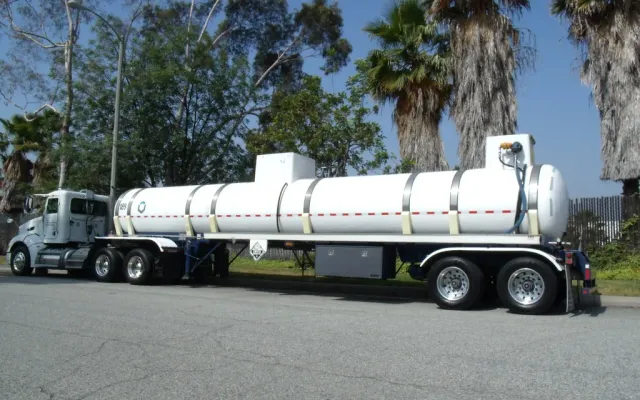
The Bureau also reports that about 70 percent of the water used for hydraulic fracturing now comes from produced water. That’s still only about a quarter of the produced volume. The rest is moved, stored and disposed of, mostly by truck and pipeline, through tanks and transfer points across the basin. Every one of those handoffs is a place it can spill.
How salty Permian produced water is
The Bureau of Economic Geology reports salinity of roughly 110,000 to 170,000 mg/L in most of the Permian, and lower, about 50,000 to 90,000 ppm median, in the southern Delaware Basin. The Texas Living Waters report describes produced water as typically saltier than seawater, in most of the Permian two to four times as salty, and in some cases up to ten times.
Why a brine spill can be worse than an oil spill
Crude is a hydrocarbon. It’s harmful in soil, but soil microbes and treatment can break petroleum hydrocarbons down over time, and remediation research focuses heavily on that biodegradation. Salt doesn’t degrade. It has to be moved.
NDSU Extension’s guide to brine impacts explains what the salt does:
- Chloride is toxic to many plants and soil organisms in and around the spill.
- Sodium breaks down soil structure. Once the total salt level drops below a threshold, sodium causes clay soils to swell and disperse. Dispersed soil loses its structure, water can’t soak in, and erosion increases.
- Plants can’t take up water. High salt concentrations cause drought-like stress even when the soil is wet, and many seeds won’t germinate.
- The damage lasts. NDSU’s guide opens with a photo of a brine spill in northwestern North Dakota that is 50 years old and still visible.
- The numbers are extreme. NDSU reports brines with electrical conductivity above 200 dS/m and sodium adsorption ratios above 300. For comparison, many crops are affected at soil EC above 2 dS/m.
| Crude oil spill | Produced water (brine) spill | |
|---|---|---|
| Main harm to soil | Hydrocarbons coat soil and can be toxic | Chloride toxicity; sodium disperses soil structure |
| Breaks down on its own | Hydrocarbons can be degraded by microbes over time | Salt does not degrade |
| Visible on the surface | Usually obvious: dark stain, odor | Can be hard to see once it soaks in; shows up later as dead or bare ground |
| Moves through soil | Depends on the oil and the soil | Dissolved salts travel with water, and NDSU stresses removing chloride to protect surface and groundwater |
| Typical remedy | Removal, treatment, bioremediation | Excavation and replacement, or amendments such as gypsum plus leaching |
NDSU describes the two remediation routes. One is ex situ: excavate the affected soil, haul it to an approved facility and bring in clean fill. The other is in situ: calcium amendments, usually gypsum, replace sodium in the soil so it can be leached below the root zone, sometimes with drainage. Either route takes time and money that containment would have saved.
What SPCC says about produced water tanks
Produced water with oil in it falls under the federal SPCC rule at production facilities. Section 112.9(c)(6) gives produced-water containers two options:
- Sized secondary containment, the same as other tank battery containers: the largest single container plus sufficient freeboard for precipitation, under 112.9(c)(2) and (c)(3).
- An alternative program instead of sized containment. This means a regular procedure to separate free-phase oil that accumulates on the water surface, described in the Plan with a Professional Engineer’s certification. It also requires regular inspection or testing of the container and its piping, corrective action and repairs, prompt cleanup of any oil discharges, and records.
The alternative has a backstop. If a facility discharges more than 1,000 gallons of oil in one event, or more than 42 gallons in each of two events within 12 months, from a produced-water container, it must bring all its produced-water containers up to the sized containment standard within six months.
One point to keep in mind: SPCC is about the oil in produced water. The salt damage happens whether or not there’s a sheen. Containment that keeps brine on the pad protects the soil even where the SPCC rule doesn’t strictly require it.
In Texas, Statewide Rule 20 requires immediate notice to the Railroad Commission district office of leaks, spills and breaks. Its notice language covers other well liquids, not just crude. Check current RRC requirements for produced-water releases with your district office.
Where produced water spills start
A tank failure is the big one that sized containment is built for. Day-to-day releases are more likely at the points where water is moved:
- Truck load-out and unloading connections at tank batteries and disposal facilities
- Hoses and hammer unions on transfer lines
- Valves and fittings on produced-water tanks and gun barrels
- Overfilled tanks, especially where a truck is late or a level alarm fails
- Lay-flat and temporary lines used to move water between locations
Containment checklist for produced water
- Lined, sized containment under produced-water tanks, or a documented alternative program if the Plan uses 112.9(c)(6)
- A drive-over mat or lined pad at every truck connection point
- Drip pans or small mats under valves and hose connections
- Restraint on pressurized transfer lines
- Level monitoring or high-level alarms on tanks that trucks fill or empty
- Regular walk-downs looking for bare or dead patches, which can be the first sign of a slow brine leak
- Rainwater checked for oil before it’s released from containment
Keep the salt on the pad
Site Safe Solutions installs containment systems for well pads and production sites in the Permian Basin, from primary pads laid out to the site to high-wall systems for large volumes and modular drive-over containment for areas trucks have to cross. For load-out points and short transfers, Fast Mats give drive-over protection without a full pad build. If a release does happen, the first hour of a spill covers what to do first.