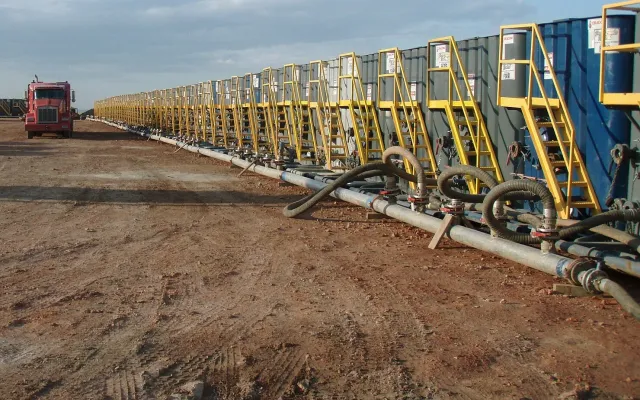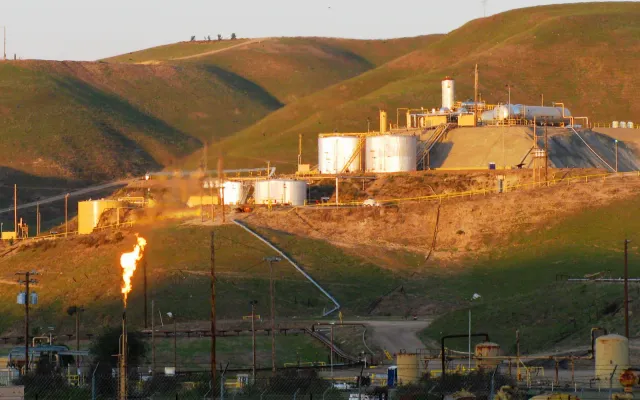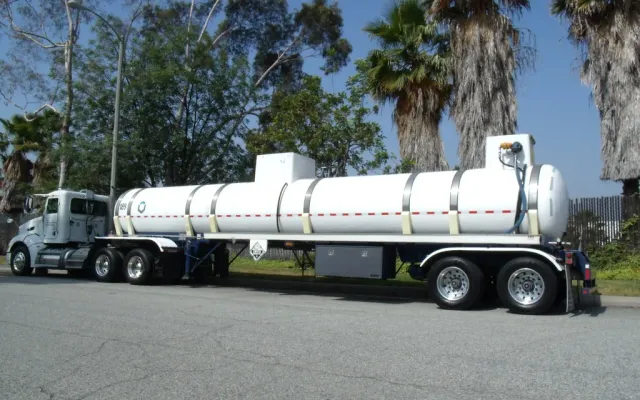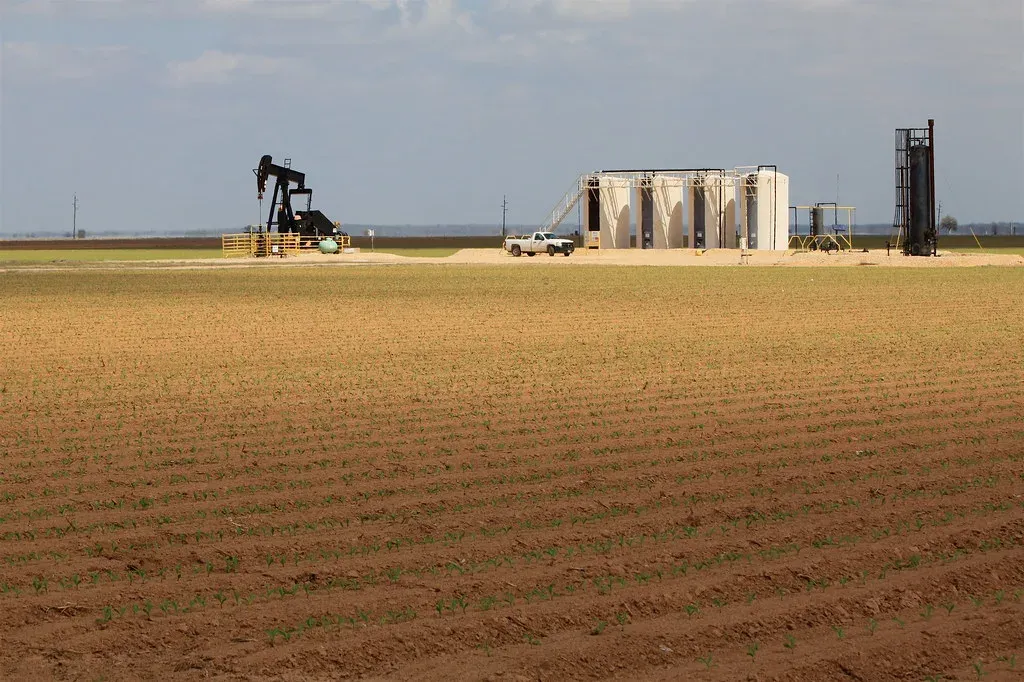
Secondary spill containment on an oilfield site comes down to five common builds: an earthen berm, a steel or modular wall with a liner, a lined primary containment pad, a high-wall system, and drive-over containment. For a tank battery the federal rule wants containment that holds the largest single tank plus room for rain, so the right pick is the one that holds that volume on your footprint and survives the trucks that work the location. The rest of this guide compares the five side by side and shows where each one fits.
If you’re still working out whether your site is covered at all, start with does my site need secondary containment. This page assumes you are, and that the question now is what to build.
General vs sized containment: the part most buyers miss
The SPCC rule has two levels of containment, and they ask for different things.
The general requirement in 40 CFR 112.7(c) applies across the facility. It says the system, “including walls and floor,” must hold oil until cleanup happens, and that you design for “the typical failure mode, and the most likely quantity of oil that would be discharged.” It can be active or passive. The rule lists acceptable onshore methods: dikes, berms or retaining walls; curbing or drip pans; sumps; drainage systems; weirs and booms; diversion ponds; retention ponds; and sorbents.
The sized requirement is stricter. For onshore production, 40 CFR 112.9(c)(2) says tank battery, separation and treating installations need “a secondary means of containment for the entire capacity of the largest single container and sufficient freeboard to contain precipitation.” Drainage from undiked areas has to go to a catchment basin or holding pond. Two carve-outs matter on a lease:
- Flow-through process vessels such as separators and heater-treaters can use an inspection-and-repair alternative under 112.9(c)(5) instead of sized containment. That alternative ends if they discharge more than 1,000 gallons at once, or more than 42 gallons twice within twelve months.
- Produced water containers can use the oil-skimming alternative in 112.9(c)(6), but it needs a PE-certified procedure and records.
EPA’s inspector guidance adds two details that change the math. Tanks permanently manifolded together count as one container, so you size for their combined capacity. And in a shared dike, the other tanks take up room below the wall height, so you deduct that displaced volume. You don’t need a separate berm for every tank. EPA says a common collection area for multiple containers is fine.
The five types side by side
| Type | Can it meet sized (largest tank + rain) containment? | Truck traffic | Terrain | Install effort | Upkeep you’ll be doing |
|---|---|---|---|---|---|
| Earthen berm (native soil) | Only if the soil is shown to be sufficiently impervious. EPA says native soil alone usually isn’t when it isn’t homogeneous | Trucks can’t cross it without a ramp, and ramps wear | Needs room. Walls get wide as they get tall | Dirt work, then compaction | Erosion, burrows, roots, vegetation, rain that sits until drained |
| Steel or modular wall with liner | Yes, when sized and the liner is intact | Wall blocks traffic. Equipment goes in before the wall closes | Works on flat, graded pads | Panels plus liner. Moves to the next site | Liner punctures, seam checks, wall panel damage |
| Lined primary containment pad | Yes, sized to the equipment on it | Designed around fixed equipment, not through traffic | Settled footprint | Built to the site layout | Liner condition, silt, drain valves |
| High-wall system | Yes, and it’s the usual answer for large volumes | Same as a wall system | Sloped ground or tight footprints where a low berm would need too much room | Heavier build | Same as wall systems, plus checking the wall stays plumb |
| Drive-over containment / mats | Small modular sections can be sized for one container. Mats are mostly for general containment at transfers and service points | Built to be driven on | Flat spots | Fast to deploy | Wear lanes, liner abrasion, emptying after rain |
A few notes on reading that table. “Sufficiently impervious” has no number in the rule. EPA’s guidance says it means the containment holds oil long enough for cleanup before it reaches water. A PE decides whether your soil qualifies. Out here, compacted caliche on a pad is not something I’d bet a tank battery on.
Active measures like mats, socks and spill kits can satisfy the general 112.7(c) requirement only where the typical failure is small. EPA’s guidance points out that most commercial spill kits handle roughly 150 gallons. It also notes that portable barriers left out long-term lose performance to rain, ultraviolet light and cold. Use drive-over mats where the risk is a hose or a fitting at a transfer point. Don’t use them in place of a sized berm around a tank.
Matching the type to the location
Tank battery on a producing lease
This is sized containment under 112.9(c)(2). A lined primary pad or a steel-wall system with an HDPE liner is the usual build. The deciding questions are footprint and whether anything needs to drive in. If the pad is cramped or on a grade, a high-wall system gets the volume without spreading out.
Frac or completion tank farm
Tanks move in and out and the layout changes job to job. Modular walls or drive-over modular containment suit this, because the equipment changes and so does the containment. Check that the wall height still holds the largest tank once you deduct for the other tanks in the same enclosure.
Fuel and chemical transfer points, service truck stops
Here the risk is a leak during a hookup. Drive-over mats sized to the truck or the transfer give you general containment where the spill would happen. See Fast Mats for that use.
Old earthen berms you inherited
Walk them before you trust them. EPA’s inspector checklist lists cracks, erosion, burrows, large-rooted plants, standing liquid, open drain valves, and design capacity versus actual capacity. Equipment added inside the berm since it was built takes up volume. If that list describes your berm, a liner or a rebuild is cheaper than finding out during a release.
Freeboard: how much extra room for rain
The rule says “sufficient freeboard” and stops there. EPA’s guidance says the agency believes the right standard is the rain from a 25-year, 24-hour storm, but it did not make that enforceable. It also says a “110 percent of storage tank capacity” rule of thumb is acceptable in many situations, while warning that 110% may not hold a real storm. Your SPCC Plan’s certifying engineer makes the call and documents it.
Two practical points. A berm that holds 110% when empty holds less after a rain that nobody drained. And 112.9(b)(1) wants dike drains at tank batteries closed and sealed except when you’re letting out uncontaminated rainwater, after you’ve inspected the water. An open valve means no containment while it’s open.
What to ask a containment contractor
Before anyone unrolls liner on your pad, get straight answers to these:
- What volume is the system designed to hold, and how did you account for the other tanks and equipment inside it?
- What freeboard did you design for, and does it match what the SPCC Plan says?
- What is the liner material and thickness, and how are seams joined and tested?
- How does the system handle trucks? If a gate or ramp opens, how is it closed again?
- What sits under the liner to protect it from rock and tank skids?
- Where does rainwater collect, and how is it drained without draining oil?
- Who installs it, and will the same crew come back to repair or move it?
A good contractor answers those without looking anything up. The ones who can’t are selling area, not containment.
Getting it built
Site Safe Solutions designs and installs containment systems across the Permian Basin: modular drive-over containment, primary containment pads built to the site layout, high-wall systems for large volumes or steep ground, and HDPE liners, put in by factory-trained crews. If you have a tank battery or tank farm to contain, send us the location and the largest tank size and we’ll work through which type fits.