Eddy current testing is an electromagnetic inspection method. A coil carrying alternating current induces small circulating currents in a conductive part, and any flaw or change in the metal alters how those currents flow. It works well on non-magnetic tube such as heat exchanger bundles. Oilfield tubing is carbon steel, which is magnetic, and that changes which electromagnetic method suits the job. If you are buying tubing inspection, ask which method fits steel and what it misses.
How eddy current testing works
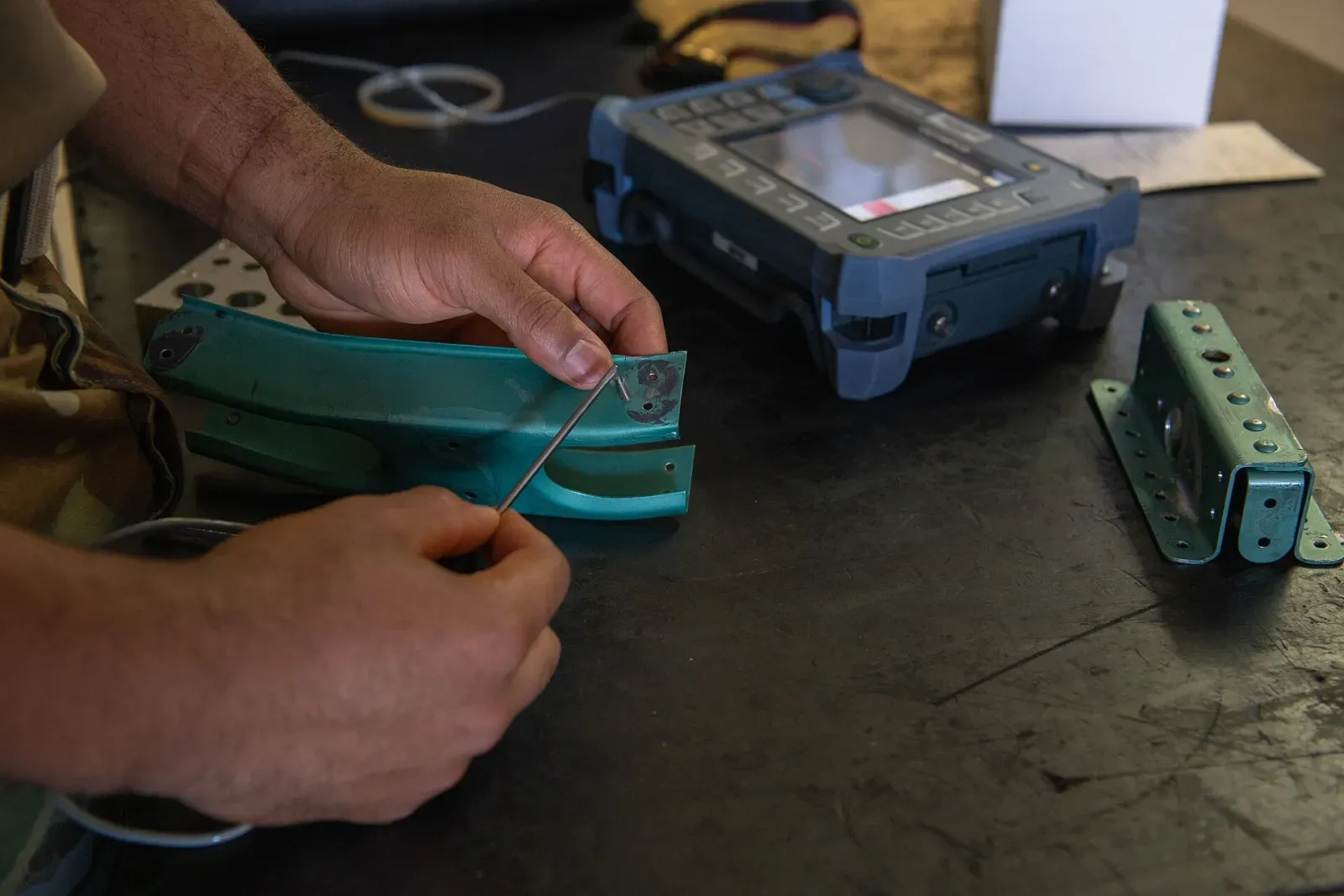
The Iowa State University NDE center describes the principle simply. When alternating current runs through a coil, a magnetic field develops around it. Bring a conductor close, and current is induced in it. Those induced currents “flow in a circular path,” which is where the name comes from. A flaw, a thickness change or a change in the metal’s conductivity disturbs the flow, and the instrument reads that disturbance as a change in the coil’s impedance.
The probe doesn’t have to touch the part. Evident Scientific, which makes the instruments, calls it a “no-contact method for the inspection of metallic parts.” The Iowa State pages list what it can do in the right conditions:
- crack detection
- material and coating thickness measurement
- conductivity measurement, used to identify materials and to check heat treatment
It’s fast, it’s portable and it gives immediate results. It also has limits, and the same source lists them plainly. Only conductive materials can be tested. The surface must be accessible to the probe. Depth of penetration is limited. Surface finish and roughness can interfere. Reference standards are needed for setup. And the training an operator needs is “more extensive than other techniques.”
Where eddy current is the standard tool for tube
Eddy current is the workhorse for tubes in power plants and chemical plants. Heat exchangers and steam generators have thousands of tubes, and a single leak can cause real trouble, so the tubes are inspected during shutdowns.
The usual set-up is a bobbin probe pushed through each tube. With a differential probe, the instrument shows no signal while the wall is uniform. When the probe passes metal thinning, the impedance plane draws a loop as the first coil crosses the damage and a second loop as the second coil crosses it. For corrosion on the outside surface, the depth shows up as a shift in phase lag.
The Wikipedia article on the method adds the catch that matters here. Tubing inspection by conventional eddy current “is generally limited to non-ferromagnetic tubing.” On that kind of tube the method is “very sensitive to detect and size pits.” Wall loss or corrosion can be detected, but sizing is not accurate.
Why carbon steel changes things
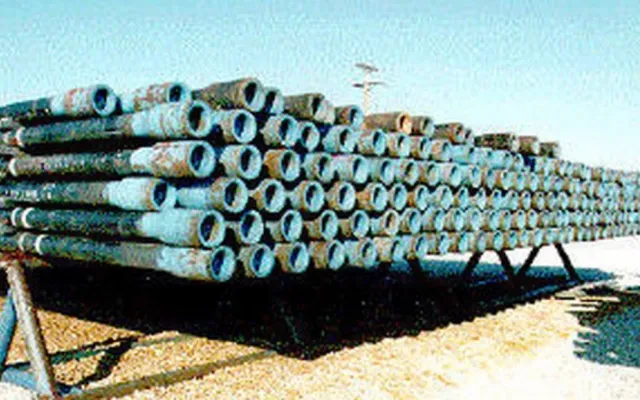
Steel is ferromagnetic. Its magnetic permeability is high and it varies from place to place, so the signal gets noisy and the eddy currents can’t reach far into the wall. The Evident tutorial notes that carbon steel is suited only to surface defects with this method and describes permeability variation as a source of noise. Oilfield tubing is carbon steel, and the damage that matters is on the inside wall.
Industry has three common workarounds, and all of them are electromagnetic:
- Saturation. Magnets applied to the probe suppress the permeability variations. Wikipedia says it’s used on partially ferromagnetic materials such as nickel alloys and duplex steels, and that its use depends on permeability, tube thickness and diameter.
- Remote field testing (RFT). A different probe geometry that reads a field passing through the tube wall. Wikipedia names it as the method used for carbon steel tubing. It’s “sensitive to general wall loss and not sensitive to small pits and cracks.”
- Flux leakage and related methods. The Iowa State pages group eddy current, remote field testing, flux leakage and Barkhausen noise together as methods that use electromagnetism. Flux leakage magnetizes the steel and reads where the field escapes at wall loss.
Size matters too. ASTM E2096, the standard practice for remote field examination, is written for heat-exchanger tubes with outside diameters from 0.500 to 2.000 inches and wall thicknesses from 0.028 to 0.134 inches. Common 2-3/8 inch production tubing has an outside diameter of 2.375 inches, already outside that range. The standard also leaves acceptance criteria to the parties using it. A method proven on condenser tube doesn’t transfer to a well string without proof.
Matching the method to the tubing and the damage
| Method | Works on | Good at | Weak spot |
|---|---|---|---|
| Conventional eddy current (bobbin probe) | Non-magnetic tube: heat exchangers, steam generators | Pits and cracks; fast bundle inspection | Limited on ferromagnetic carbon steel |
| Saturation eddy current | Partially ferromagnetic alloys such as nickel and duplex steel | Cracks and pits where permeability noise is suppressed | Depends on permeability, thickness and diameter |
| Remote field testing | Carbon steel tube, installed heat exchangers in the standard | General wall loss | Not sensitive to small pits and cracks |
| Flux leakage and electromagnetic induction methods | Ferromagnetic tubing and pipe | Wall loss and local defects read along the joint | Needs interpretation by an experienced operator |
The damage mode is the other half of the choice. Pitting, mesa corrosion from CO2 and rod-on-tubing wear are all local. A string can average well and still hold one joint that is nearly through the wall. A method that responds mainly to general wall loss can pass a joint a pit has already compromised. So match what the tool is good at to the damage your wells produce. For how CO2 attack looks in pulled tubing, see our CO2 corrosion guide for Permian tubing. For how flux leakage reads a joint, see magnetic flux leakage tubing inspection.
Questions to ask a tubing inspection provider
- Which method will you run on this tubing, and why does it suit carbon steel?
- What damage does it detect, and what can it miss? Ask about pits and rod wear specifically.
- What reference standards do you calibrate on, and does the sample match my tubing’s size and grade?
- How is the tubing prepared? Pulled tubing comes out with scale and paraffin, and surface condition can interfere with electromagnetic methods.
- Do I get a joint-by-joint record I can compare with the next pull?
- Who interprets the trace, and how much tubing have they read?
Operator skill matters as much as the instrument. The Iowa State pages are blunt about the training required, and a trace is only as good as the person calling it.
EMI tubing inspection from Site Safe Solutions
Site Safe Solutions provides EMI tubing inspection in the Permian Basin. EMI, electromagnetic induction, reads the condition of the tubing wall without touching it, so it works in the flowing, sand-laden conditions where contact methods struggle, and it leaves a digital record of each joint. For what a scan finds and why the worst joint, not the average, decides a string’s life, see what EMI tubing inspection finds. If tubing is coming out of the hole soon, tell us the well and the pull date.