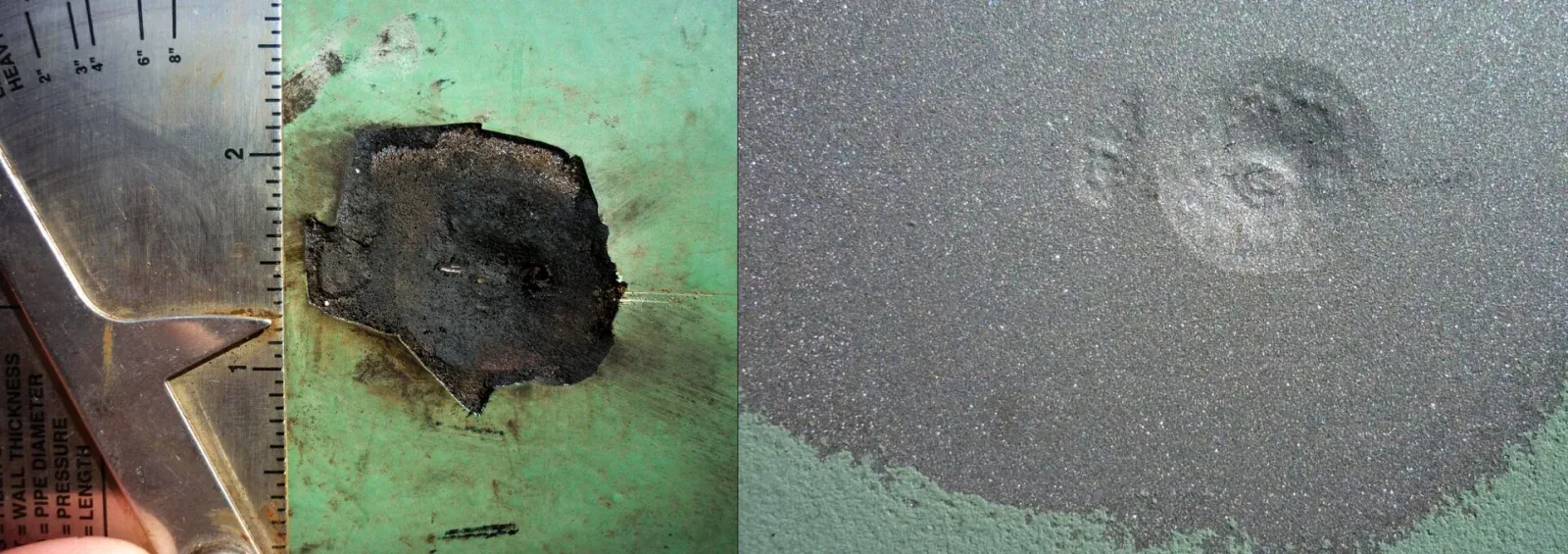
Microbiologically influenced corrosion (MIC) is corrosion that bacteria and other microbes start or speed up. NACE and ASTM define it as “corrosion affected by the presence or activity, or both, of microorganisms.” On an oil lease it shows up as deep, localized pits in carbon steel where water sits still: the bottom of a flowline, a dead leg, a tank bottom under sludge, a joint of tubing in a low-rate well. Sulfate-reducing bacteria (SRB) are the best-known culprits. The damage looks like ordinary pitting, so a lab result alone won’t prove it, and a visual check alone won’t size it. You find it by measuring wall loss joint by joint and line by line.
What microbiologically influenced corrosion is
Microbes settle on a wet metal surface, build a slimy biofilm, and change the chemistry right at the steel. A 2023 review in FEMS Microbiology Reviews by Knisz and co-authors lays out the main ways that happens:
- Deposits and concentration cells. Patchy biofilm or deposits shield part of the surface from the bulk fluid. The covered spot becomes an anode and corrodes faster than the steel around it. That’s under-deposit corrosion.
- Oxygen removal. Aerobic bacteria in the outer biofilm use up oxygen and leave an anaerobic layer underneath, which is where SRB and other anaerobes grow.
- Sulfide. SRB turn sulfate into hydrogen sulfide. Their activity leads to H2S, which attacks steel and can sour a system.
- Direct electron uptake. Some SRB pull electrons straight from iron, according to a 2024 review in Materials by Lv and colleagues.
Lv et al. call pitting caused by SRB “the main form of corrosion affecting carbon steel” in MIC, and report that SRB pitting is more severe than uniform corrosion. They also cite estimates that MIC accounts for about 20% of the total cost of corrosion of metals.
Microbial corrosion vs. ordinary corrosion
“Microbial corrosion”, “microbial induced corrosion”, “MIC corrosion” and “biocorrosion” all mean the same thing in field use.
| Microbial corrosion (MIC) | CO2 (sweet) corrosion | Oxygen corrosion | |
|---|---|---|---|
| What drives it | Biofilm, SRB, sulfide, deposits | Carbonic acid from CO2 in water | Dissolved oxygen in water |
| Where on a lease | Still or stratified water: dead legs, tank bottoms, low spots in flowlines, low-rate wells | Produced fluids with CO2, worse in CO2-EOR fields | Open hatches, leaky pump seals, aerated water systems |
| Typical damage | Isolated deep pits, often with a small opening over a larger cavity; fast attack at welds | Pitting, mesa attack, flow grooves | General thinning plus pits under rust |
| Gets worse with | No flow, solids, sulfate in the water, oxygen let in now and then | More water, higher temperature and pressure, H2S | More oxygen, chlorides |
The CO2 column is covered in more detail in our guide to CO2 corrosion in Permian tubing.
Oxygen leaks matter too. Knisz et al. report that SRB corrosion rates went up by a factor of three when oxygen was present now and then, compared with fully aerobic or fully anaerobic conditions (citing Lee et al., 2004). A produced water system that is mostly sealed but takes in air at a hatch, a tank swap or a leaky seal sits in that in-between state.
Where MIC shows up on an oil lease
Knisz et al. put it plainly: MIC “is found in piping and assets with no flow or stratified flow, which allows solids and water to accumulate.”
- Dead legs. Bypass lines, spare headers, capped tees and lines left in place after a well was shut in, where nothing flushes out the water and solids.
- Low spots in flowlines and gathering lines. Water drops out at the bottom of the pipe and at dips in the route. Wikipedia’s summary of the research notes SRB can grow in sludge and sand layers around 1 mm thick at the bottom of pipes, where it’s anoxic.
- Tank bottoms and water legs. Sludge in produced water tanks, gun barrels and frac tanks gives biofilm a home.
- Tubing in low-rate and shut-in wells.
- Welds. Knisz et al. call rapid attack of weld regions “one of the well-documented failure modes for MIC,” with through-thickness pitting reported within months. It often looks like a pinhole on the surface with a large cavity under it.
- Lines that sat wet after a hydrotest. The same review lists hydrostatic test records and “actual test media used” among the data to pull when MIC is suspected. Untreated test water left in a line is a known way to seed it.
How to tell if it’s MIC: testing for sulfate-reducing bacteria
No single test proves MIC. Knisz et al. say that “there exists no singular test or assay that can conclusively identify that MIC has occurred,” and that pitting from non-biological corrosion can look the same.
The common tests each answer a different question:
| Test | What it tells you | Limit |
|---|---|---|
| Culture tests (“bug bottles”, MPN serial dilution) | Whether bacteria that grow in that medium are present | Cheap and easy, but fewer than 1% of microorganisms can be cultured, it says nothing about activity, and results take days |
| Molecular tests (qPCR, sequencing) | Which microbes are present and how many, including ones that won’t culture | Presence isn’t proof they caused the damage |
| Water chemistry (sulfate, sulfide, iron, pH) | Whether the conditions support SRB and whether sulfide is forming | Indirect evidence only |
| Coupons and probes | Corrosion rate at one point in the system | Only reads the spot where it’s installed |
| Inspection of the steel (EMI, UT, visual on pulled pipe) | Where the wall is actually thin, and how deep the pits go | Says what happened, not why |
The review’s answer is “multiple lines of evidence”: put the microbiology, the water chemistry, the operating history and the inspection data together before calling it MIC. Early oil and gas work leaned on culture counts alone. As molecular methods spread, operators found microbes almost everywhere, so a positive bug bottle on its own doesn’t explain a hole.
For a company man that means measuring the damage first, then use the lab work to decide whether biocide or cleaning will stop it from coming back.
MIC corrosion in pipelines, flowlines and tubing: what the rules expect
SPCC rules don’t name MIC, but under 40 CFR 112.9, an onshore oil production facility with an SPCC plan has to:
- run a written flowline and intra-facility gathering line maintenance program that makes sure lines and valves are “compatible with the type of production fluids, their potential corrosivity, volume, and pressure” (112.9(d)(4)(i));
- “visually inspect and/or test” those lines on a periodic, regular schedule “for leaks, oil discharges, corrosion, or other conditions that could lead to a discharge” (112.9(d)(4)(ii));
- where the operator uses the 112.9(c)(6) alternative to secondary containment for produced water containers, inspect and/or test those containers and their piping on a regular schedule for “leaks, corrosion, or other conditions”;
- inspect saltwater (oil field brine) disposal facilities often, particularly after a sudden temperature change (112.9(d)(2)).
Internal pitting in a flowline is exactly the condition that rule asks you to look for.
Tubing and MIC: why joint-by-joint inspection matters
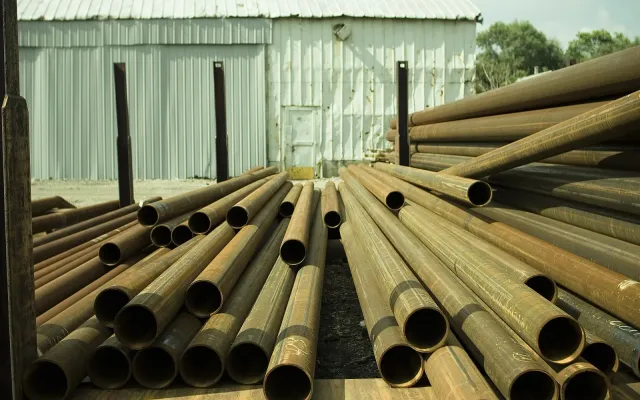
MIC damage is local, which makes it a bad fit for averages. One joint in a string can carry a deep pit while the joints above and below look fine. A visual check at the rack misses internal pits, and a spot UT reading only covers the spot.
Electromagnetic inspection reads the whole length of each joint. It finds wall loss, pitting and rod wear without touching the pipe, including loss on the inside surface that can’t be seen. Each joint gets a trace, so pitted joints can be laid down and sound ones run back. What EMI tubing inspection finds covers the method in more detail.
Inspection also gives the biocide program something to check against. If a well was treated after the last pull and the next scan shows the same joints still losing wall, the treatment isn’t working.
How to prevent microbial corrosion on location
Knisz et al. list the internal corrosion controls used in pipelines: biocides, corrosion inhibitors, oxygen scavengers, velocity control, mechanical cleaning such as pigging or flushing, UV treatment, separators and filters, and controlling the quality and source of the water going in. Carbon steel stays the default because, as the same review notes, corrosion-resistant alloys that resist pitting are “not economical in most cases.”
On a lease, that becomes a checklist:
- Find the still water. Map dead legs, low spots and idle lines. Remove dead legs you don’t need. Flush or pig the ones you keep.
- Get the solids out. Clean tank bottoms and water legs on a schedule. Sludge and sand are where SRB grow.
- Keep oxygen out. Close hatches, fix leaking seals and keep produced water systems sealed. Oxygen let in now and then makes SRB corrosion worse.
- Treat the water you put in. Use treated water for hydrotests and don’t leave test water sitting in a line.
- Run biocide where it’s needed, and check it. Quaternary ammonium (benzalkonium chloride) products are common in the oilfield. Use water chemistry and molecular tests to see whether the population is actually dropping.
- Measure the steel. Scan tubing every time it’s pulled and keep the records. Inspect flowlines and produced water piping on the schedule your SPCC plan sets.
EMI tubing inspection in the Permian Basin
Site Safe Solutions runs EMI tubing inspection at the wellhead or on the lease. The scan finds wall loss, rod wear and corrosion in each joint and produces digital trace records, so pitted joints come out of the string and the rest go back to work. The company describes itself as the only provider in the Permian Basin with ACE-Making technology. If you have tubing coming out of a well with a pitting or failure history, tell us the size and joint count and we’ll set up a scan while it’s on surface.