Frac tank cleaning means getting the liquids, sludge and solids out of a steel frac tank so it can go to its next job or back to the rental yard. Three questions decide how the job goes. What was in the tank decides where the waste goes. Whether anyone has to climb in decides whether you’re running a permit-required confined space entry. And the wash water needs somewhere to go other than the pad. A 500-barrel frac tank holds 21,000 gallons, so even the residue at the bottom is a real volume of waste.
What was in the tank decides where the waste goes
Start with the last load. In Texas, the Railroad Commission’s guidance on hazardous oil and gas waste sorts oilfield waste using the federal RCRA exemption for exploration and production (E&P) waste. Its rule of thumb is that a waste is exempt if it came from downhole or was in contact with the production stream. Waste that isn’t unique to E&P work, such as cleaning chemicals, isn’t covered. The same guidance says the person who generates the waste has to determine whether it’s hazardous and keep a record of that determination for three years.
For frac tanks, the RRC’s lists come down to this:
| What the tank held or what you used | Exempt from RCRA hazardous waste rules? | Source line in the RRC guidance |
|---|---|---|
| Produced water, flowback, completion or stimulation fluids returned from the well | Yes | “Produced water”; “Well completion, treatment, and stimulation fluids” |
| BS&W and tank bottom sludge from storage of product and exempt waste | Yes (primary field operations only) | “Basic sediment & water and other tank bottom sludge” |
| Rinsate from a tank that held only exempt waste, washed with non-hazardous water | Yes | Vacuum truck and drum rinsate provision |
| Unused frac fluids or acids | No | “Unused fracturing fluids or acids” |
| Rinsate from a tank that held non-exempt waste | No | “Vacuum truck and drum rinsate from trucks and drums transporting or containing nonexempt waste” |
| Caustic or acid cleaners, spent solvents | No | “Caustic or acid cleaners”; “Waste solvents” |
A non-exempt waste isn’t automatically hazardous, but someone has to make the hazardous waste determination before it moves. Mixing streams is where jobs go wrong. A tank that held flowback, washed out with a caustic degreaser, can leave you with wash water that’s no longer a simple exempt stream. Ask what the tank held, get the safety data sheets for anything that wasn’t produced fluid, and pick the cleaning chemistry with the waste route in mind.
Check for NORM before anyone cleans
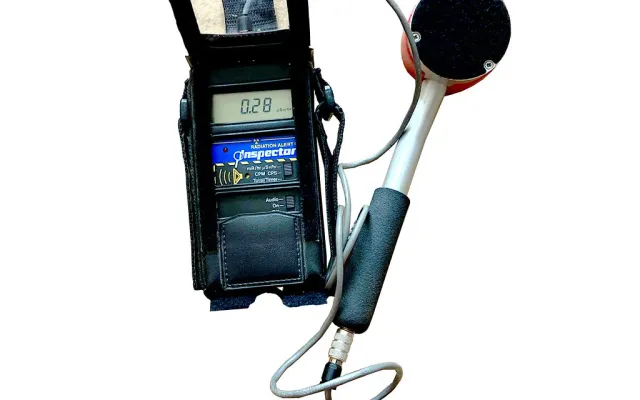
Tank bottom sludge from produced water can carry naturally occurring radioactive material (NORM), mostly radium. In Texas, the Railroad Commission defines NORM-contaminated oil and gas equipment as equipment that reads above 50 microroentgens per hour, including background, at any accessible point. Decontaminating equipment above that level is licensed work under the Department of State Health Services rule, 25 TAC §289.259.
So a tank that has spent its life on produced water gets surveyed with a meter before anyone washes, scrapes or vacuums the bottom. If it reads high, stop and bring in a licensed contractor. NORM in oilfield equipment covers the Texas rules and where scale and sludge build up.
Is a frac tank a confined space?
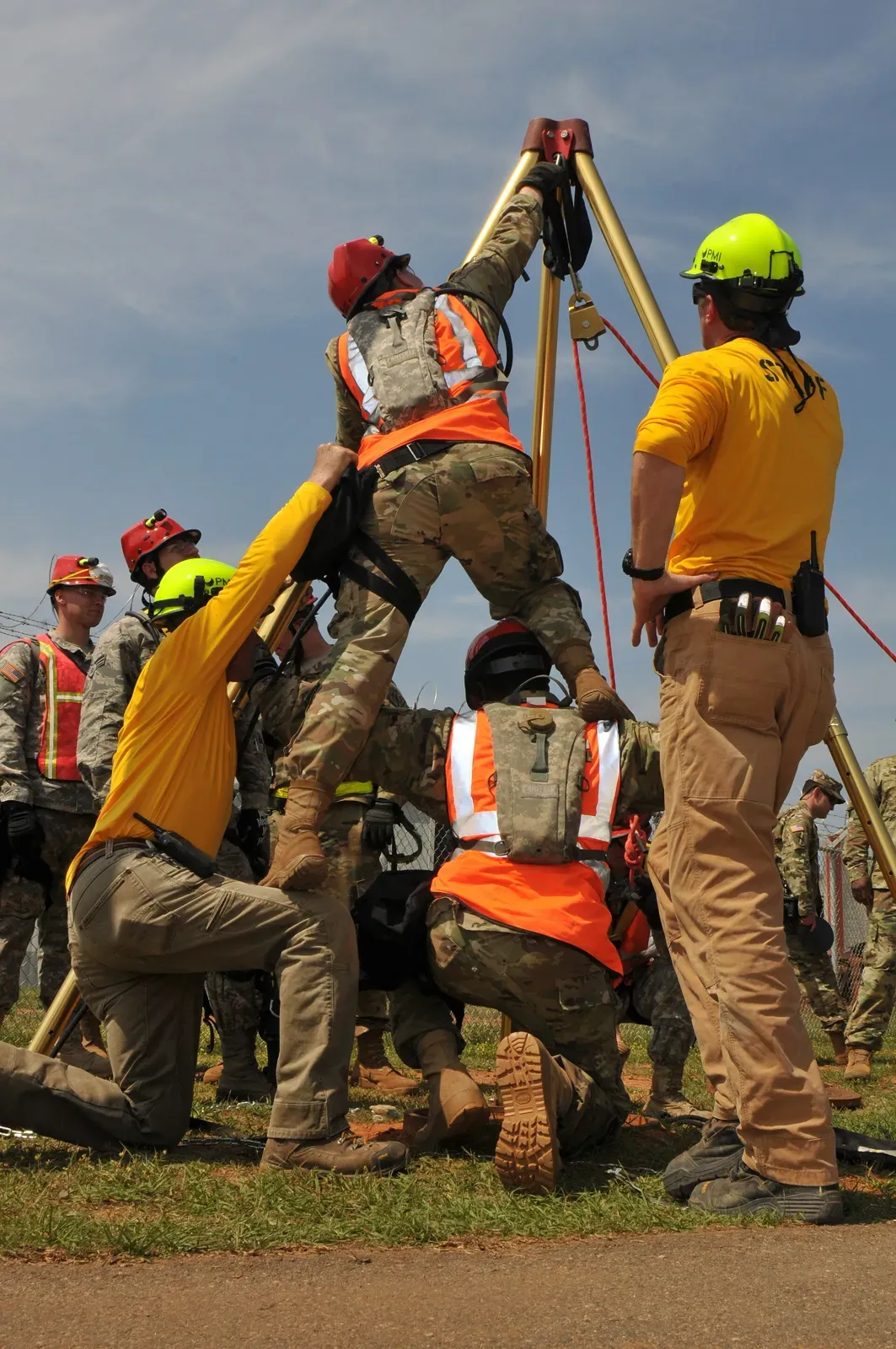
Almost always, if someone has to go inside. OSHA’s general industry standard, 29 CFR 1910.146, defines a confined space as one big enough to enter and work in, with limited entry or exit, that isn’t designed for continuous occupancy. A frac tank with a manway fits all three. It becomes a permit-required confined space if it has, among other things, a hazardous atmosphere or a material that can engulf someone. Sludge and residual hydrocarbons make that likely.
The standard sets the atmospheric lines:
| Condition | Hazardous when |
|---|---|
| Flammable gas or vapor | Over 10% of its lower flammable limit (LFL) |
| Oxygen | Below 19.5% or above 23.5% |
| Toxic substance | Above its OSHA permissible exposure limit |
For hydrogen sulfide, OSHA’s Table Z-2 sets a ceiling of 20 ppm, with a peak up to 50 ppm allowed once, for no more than 10 minutes, and only if there’s no other measurable exposure. Sour crude and some produced water put H2S in tank bottoms.
The atmosphere at a tank opening can kill fast. A 2016 CDC report looked at nine oil and gas workers who died suddenly while gauging or sampling production tanks between 2010 and 2015. All were working alone, and in at least five cases the hatch was open. In one case OSHA measured hydrocarbon vapors above the lower explosive limit and oxygen as low as 11% one foot above the open thief hatch. Another worker’s gas monitor showed oxygen as low as 7% on the day he died. The report notes that oxygen below 10% can cause loss of consciousness within seconds to minutes. All nine were outside the tank, at a hatch or on the catwalk.
The frac tank cleaning process, step by step
The aim is to keep people out of the tank for as much of the job as possible. Ecoserv, a tank cleaning contractor, says manual entry is generally discouraged and that its remote cleaning system cuts confined space entry by up to 80% on high-risk jobs. Whatever equipment you use, the order of work is much the same:
- Find out what was in it: last contents, SDS for any chemicals, and whether H2S is possible. This sets the waste route and the gas monitor setup.
- Survey for NORM if the tank held produced water or sludge. Above 50 µR/hr, stop.
- Pump or vacuum free liquids to a destination that matches the waste classification. Don’t mix exempt and non-exempt streams in the same truck.
- Ventilate and test the atmosphere from outside. 1910.146 sets the order: oxygen first, then combustible gases, then toxics. Appendix B explains that most combustible gas meters depend on oxygen to read correctly.
- Clean from outside first. Wands, nozzles or remote equipment through the manway take out most of the sludge without anyone going in.
- If someone has to go in, the employer needs a written entry permit, an attendant outside who keeps a count of entrants and stays put until relieved, and a way to summon rescue. OSHA’s Appendix F says posting the 911 number isn’t enough on its own. The standard requires canceled permits to be kept for at least a year.
- Collect the rinsate. Final rinse water goes to the same classified waste stream as the sludge.
- Inspect the tank before it’s released. Check the floor, seams and valves while it’s clean. Note any damage before it goes back to the yard.
Where the wash water goes
Cleaning a tank on location makes oily water. If it runs off the work area, the cleaning job becomes a spill. Set the tank, the pump and the wash area on lined containment, keep the rinsate inside it and pump it out to the right waste stream. For containment around the tanks themselves, see frac tank secondary containment.
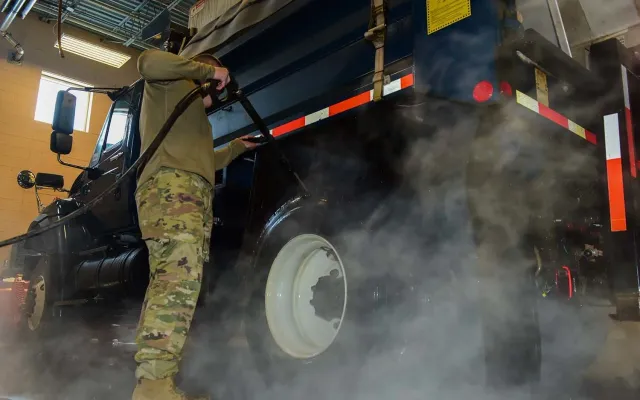
Washing the outside of the tank is a simpler job because nobody goes in. Exterior steel takes pressure washing. The runoff falls under the same waste rules, so wash on containment there too.
Frac tank sizes and why sludge volume adds up
DAE Pumps puts frac tanks at roughly 8,400 to 21,000 gallons. The 500-barrel tank is the common size: 500 barrels × 42 gallons = 21,000 gallons. Solids that settle out of flowback or produced water take up capacity and have to be removed. When you plan a cleanout, ask the rental company how many tanks, what each one held and roughly how much bottom is left. That tells you how much waste to plan for and how many loads it will take.
Equipment cleaning and containment in the Permian
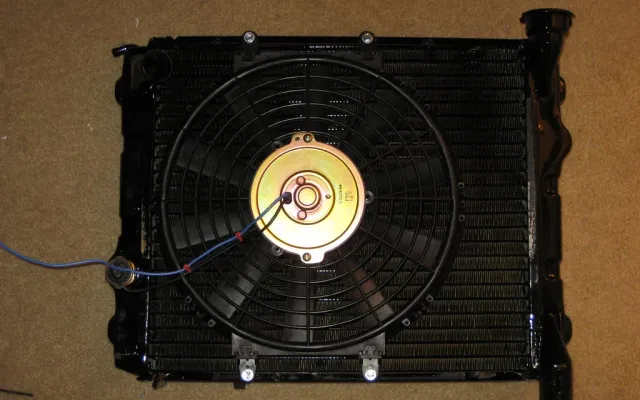
Site Safe Solutions provides equipment cleaning in the Permian Basin: pressure washing with environmentally friendly detergents for mats, trailers, tanks and rigs, and steam for radiators. We also provide containment systems that keep wash water on the liner. If you have tanks coming off a job, tell us how many and what they held.