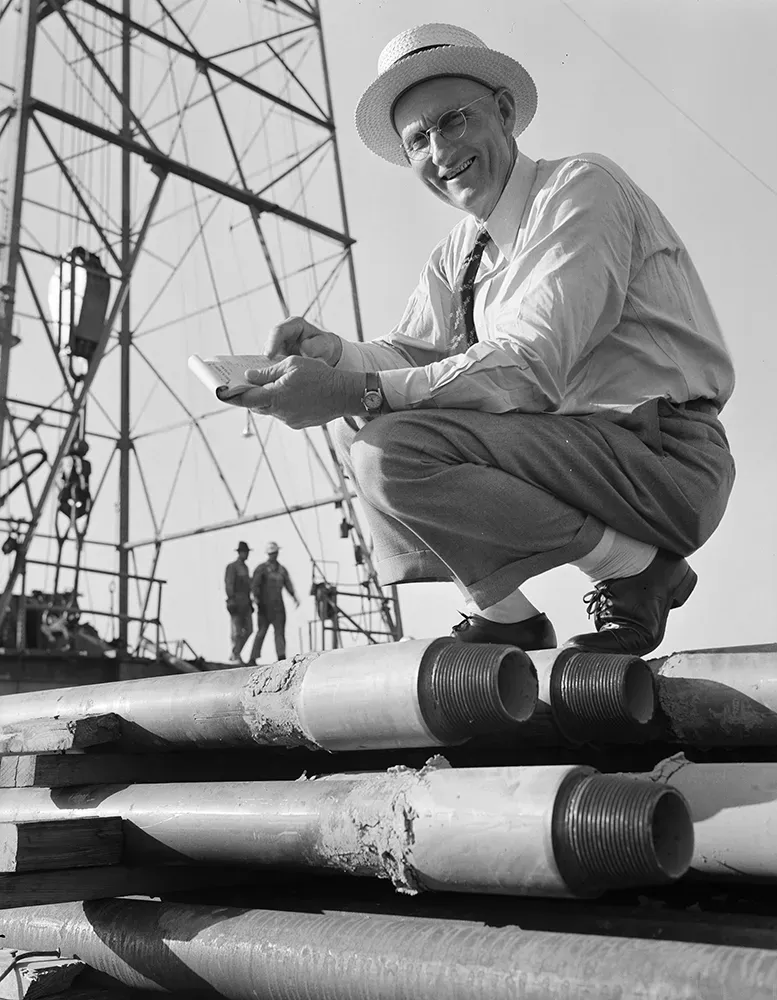
A pup joint is a short length of tubing or casing, shorter than a standard Range 1 joint, used to space out a string so the pump, packer or hanger lands at the right depth. API Specification 5CT defines it as “casing or tubing of length shorter than Range 1.” Tubing pups usually run from 2 to 12 feet and carry the same size, grade and connection as the string they go into. On a frac location the same word means something else: a short, straight section of treating iron with hammer union ends, rated for frac pressure. Both get reused from job to job, and both should be inspected as carefully as the full-length pipe around them.
What is a pup joint?
The IADC Lexicon collects the definitions used in API standards. The ones that matter in the oilfield:
- API Spec 5CT (casing and tubing): casing or tubing of length shorter than Range 1.
- API RP 5C5 (connection testing): a short pipe length, usually with threaded ends.
- API Spec 19TT (well test tools): a short tubular element used to join two threaded connections.
Vallourec describes pups as short casing or tubing used for handling production tubing assemblies and for spacing out full-length tubing and casing strings. It notes the other names you’ll hear: saver sub, spacer, or just “pup.”
Pup joint lengths compared with full joints
Full-length tubing comes in length ranges. Production Technology gives Range I as 20 to 24 feet and Range II as 28 to 32 feet. Anything shorter than Range 1 is a pup.
| Item | Length | Source |
|---|---|---|
| Tubing pup joints (stock lengths) | 2, 3, 4, 6, 8, 10 and 12 ft | Tejas Tubular |
| Casing and tubing pups (stock lengths) | 2, 3, 4, 5, 6, 8, 10 and 12 ft | Vallourec |
| Range I tubing | 20 to 24 ft | Production Technology |
| Range II tubing | 28 to 32 ft | Production Technology |
| 1502 frac iron pup joints, 2 in and 3 in | 2 to 10 ft | SLB / Cameron product sheet |
Tejas lists tubing and casing pup sizes from 2-3/8 in through 9-5/8 in, with standard and heavy walls, and custom lengths on request.
What pup joints are used for
Most pups are there for space-out. A tubing string is built from whole joints, but the depth you need almost never comes out to a whole number of them. A pup or two near the top makes up the difference so the tubing hanger lands in the wellhead with the bottomhole equipment where it belongs. Pups also go in between pieces of downhole equipment, and Vallourec mentions handling pups for production tubing assemblies.
A pup joint and a crossover are different parts. A pup matches the string’s connection on both ends. Vallourec’s spec for its pups is simply “Connection: Same as string.” A crossover changes from one thread or size to another. Tejas offers special pup configurations for crossover and gas lift work, so check what you’re actually picking up off the rack.
Matching a pup to the string
A pup is part of the pressure boundary and part of the load path. It should match the string in:
- Outside diameter and weight (wall). A lighter-wall pup is the weak spot in the string.
- Grade. A J-55 pup in an L-80 string drops the string’s rating at that point.
- Connection. EUE and NUE are both common in tubing. Production Technology explains that EUE (external upset end) has thicker wall at the ends, so cutting threads doesn’t reduce the body’s strength, which is why it’s the more common choice. NUE (non-upset) tubing has no added diameter at the ends and is sometimes chosen where clearance is tight, for example beside an ESP cable.
- Drift. A pup with a smaller ID than the string can stop a tool that passes everything else.
New API pups are made to 5CT. Tejas says its pups are heat treated, straightened, hydrostatically tested in line (its tester reaches 20,000 psi) and get a full-body ultrasonic inspection before they ship. Those checks describe a new pup, and a pup that has spent years under a hanger in a rod-pumped well needs its own look.
Tubing pups vs frac iron pups
| Tubing or casing pup | Frac iron (flow iron) pup | |
|---|---|---|
| Where it goes | Downhole, in the tubing or casing string | On surface, in treating iron from the pumps to the wellhead and in flowback lines |
| Ends | Same thread as the string (EUE, NUE, premium) | Hammer union ends, e.g. 1502 wing union with NPST threads |
| Standard | API 5CT | Manufacturer rating. SLB lists 15,000 psi working pressure for its 2 in and 3 in pups |
| Sizes | 2-3/8 in to 9-5/8 in | 2 in and 3 in are common |
| Typical lengths | 2 to 12 ft | 2 to 10 ft |
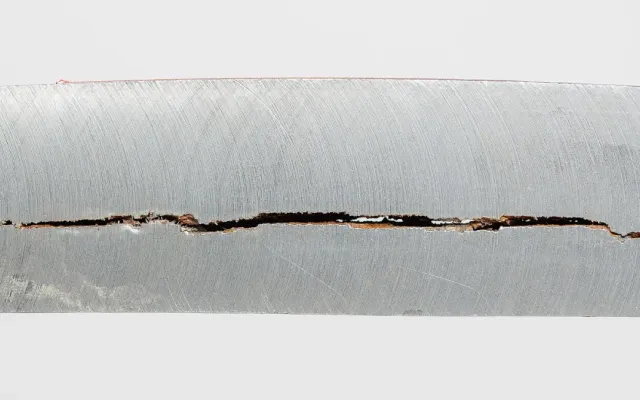
| How it fails | Wall loss from corrosion, rod wear, thread damage | Erosion from sand, thread and union wear, a mismatched union |
Why tubing pups need inspecting
Tubing fails at its worst point, and a pup can be that point. It sits in the same fluid, at the same temperature and under the same rod string as the full joints around it, so it collects the same corrosion and rod wear. Pups are also easy to lose track of: they come out of the hole, go on a separate rack, and can go back in on the next job with no record of how many runs they’ve made.
When the string is on surface during a workover, that’s the time to find the bad joints, pups included. Electromagnetic (EMI) inspection reads tubing wall condition without touching it. It picks up general wall loss from corrosion, including loss on the inside surface that a visual check can’t see, along with localized pitting and rod wear. More on what it finds: what EMI tubing inspection finds.
Practical points for pups on a workover:
- Count the pups coming out and note where each one sat in the string.
- Keep them with the string’s inspection record instead of on a loose rack.
- Lay down any pup whose threads are galled, whose body is bent, or whose grade marking you can’t read.
- Check that the replacement pup matches size, weight, grade and connection.
- Drift it before it goes in the hole.
Inspecting frac iron pups
Frac iron pups carry full treating pressure on surface, often only a few feet from people. OSHA’s hydraulic fracturing hazard publication (OSHA 3763) asks employers to inspect high-pressure lines from the pump trucks to the wellhead before the job, inspect and test iron before use with an eye for sand erosion, pressure test lines to at least the maximum expected treating pressure without going over the rating of the lowest-rated component, and inspect equipment at rig-down and remove suspected defective pieces from service.
Two pup problems are worth checking for. The first is a pup with a lower-rated union figure built into a 15,000 psi line, since hammer unions of different figures can look alike and still make up. See why mismatched hammer unions fail. The second is erosion on flowback lines, where sand returning from the well wears the iron.
A short pup also adds two connections to the line. Each connection is a place where the line can part, and OSHA 3763 calls for high-pressure lines to be restrained so they can’t whip if one does.
EMI inspection and restraints from Site Safe Solutions
Site Safe Solutions runs EMI tubing inspection at the wellhead or on the lease, scanning tubing for wall loss, rod wear and corrosion while it’s out of the hole during a workover or pull. Ask about the pups in your string when you book the scan. For treating iron and flowback lines on surface, the company also installs high-pressure restraint systems that tie each section of iron to the next and to anchor points.