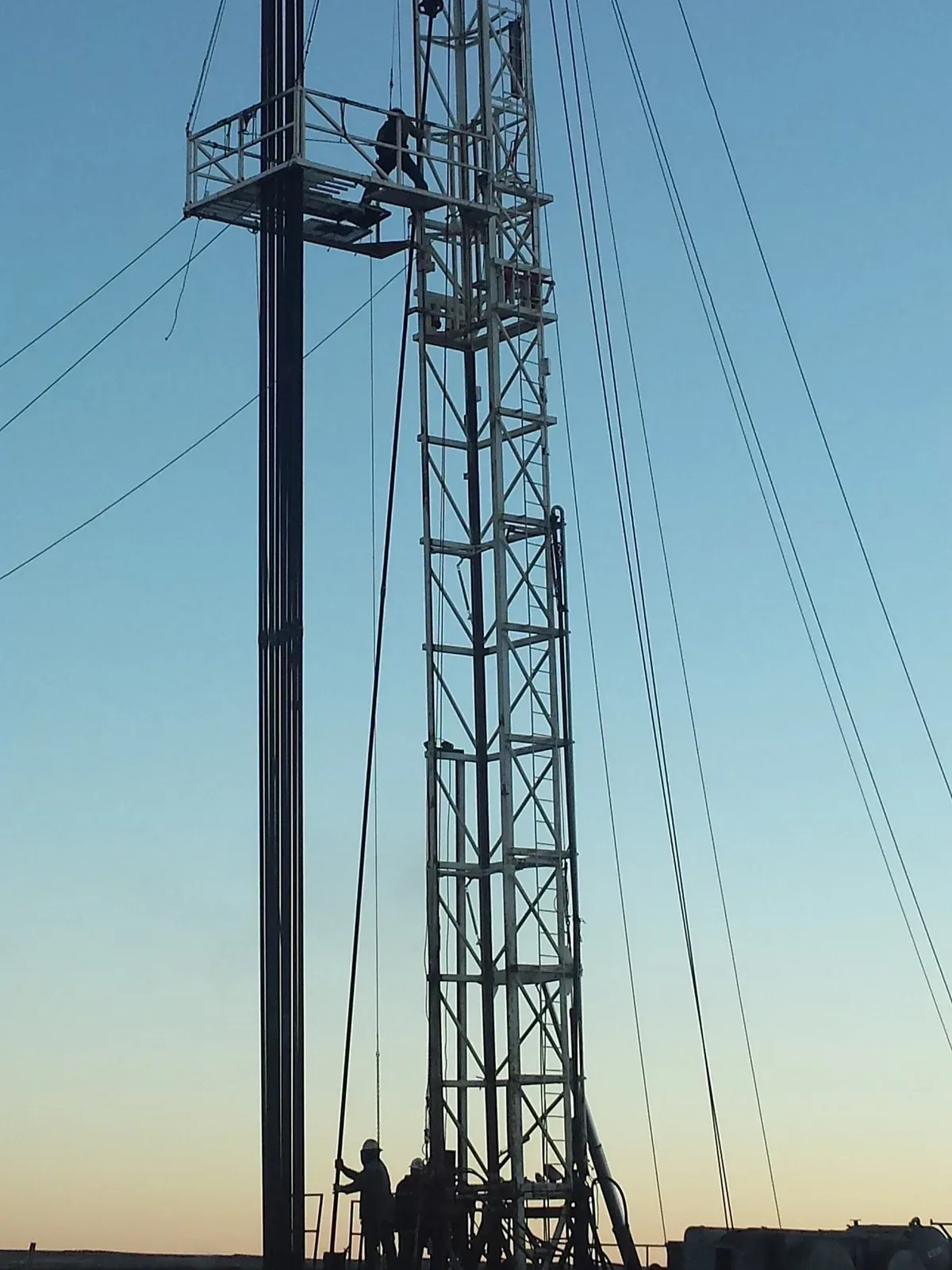
Roustabout services are the general labor and light mechanical work that keeps a lease running between the big jobs. That means handling pipe, repairing flowlines, setting and moving equipment, cleaning up spills, digging, and putting a pad back together. When a company man calls for a roustabout crew, he wants hands with a truck, hand and power tools, and enough experience to work around live production equipment without being walked through every step. Below: what those crews do, which Texas rule puts a deadline on their work, and what to tell the contractor before the crew rolls.
What is a roustabout?
The federal job description is short. O*NET, the Labor Department’s occupational database, defines roustabouts, oil and gas (code 47-5071) as workers who “assemble or repair oil field equipment using hand and power tools.” The Bureau of Labor Statistics adds that roustabouts “also clean oil rigs, equipment, and work areas,” and that offshore they work with crane operators to load and unload supplies.
BLS counted 45,500 roustabouts in the US in its latest figures, with a median annual wage of $46,960 in May 2025. Most oil and gas workers don’t work for operators. BLS says 72% of them work in “support activities for mining,” the contractor side of the industry, against 16% employed directly in oil and gas extraction.
The job titles O*NET collected from employers tell you how loosely the word gets used: oil field roustabout, production roustabout, floor hand, rig hand, roustabout pusher, roustabout crew pusher. The pusher is the crew lead, and the person your company man will deal with on location.
Roustabout vs roughneck vs service hand
People use these words loosely in the field. The federal descriptions separate them like this.
| Role | What BLS / O*NET describe | Where you’ll see them |
|---|---|---|
| Roustabout | Assembles and repairs oilfield equipment, cleans rigs and work areas, handles pipe and material | Production leases, tank batteries, rig moves, pad work |
| Roughneck / floorhand | BLS: “Experienced roustabouts may be called roughnecks.” Works the rig floor on drilling and workover rigs | Drilling and workover rigs |
| Service unit operator | Runs equipment that increases flow from producing wells or removes stuck pipe, tools or other obstructions | Well servicing and workover units |
On a Permian lease, if the work is on the rig floor, it belongs to the rig crew. If it’s everything around the rig, or a lease with no rig on it at all, it’s roustabout work.
Roustabout services operators call for
O*NET’s task list for the occupation reads like a lease work order. Here are those tasks grouped into the jobs an operator usually calls a crew for, with what the crew needs from you to finish without a second trip.
| Job | What the crew does (from the O*NET task list) | What to have ready |
|---|---|---|
| Pipe, rod and tubing handling | Unscrews and tightens pipe, casing, tubing and pump rods with power wrenches and tongs; moves pipe to and from trucks with winches and lifts or by hand | Joint count, sizes, where it’s going, whether it’s being inspected before it goes back in |
| Flowline work | Walks flowlines to find leaks with detectors and visual checks, then repairs them; lays gas and oil lines | Line map, isolation and lockout points, who signs off the line before it’s returned to service |
| Equipment work | Dismantles and repairs field machinery, bolts together pump and engine parts | Parts on hand, manufacturer specs, permit-to-work if the equipment is energized |
| Spill cleanup | Cleans up spilled oil by bailing it into barrels | Volume estimate, what it is (oil, produced water, chemical), where the waste goes |
| Pad and dirt work | Digs drainage ditches around wells and tanks; sets forms and pours concrete foundations; clears brush to cut fire risk and open roads | One-call ticket, buried line locations, final grade you want |
| Rig support and moves | Supplies equipment to the rig floor and helps the rig crew; cleans field trucks | Rig schedule, lift plan for anything heavy |
A good crew will also ask about H2S on the lease, where the muster point is, and who to call if something goes wrong at 2 a.m.
Spill cleanup and the plugging clock in Texas
Two kinds of roustabout work have Railroad Commission rules behind them.
The first is spill response. Bailing free oil into barrels is roustabout work, but cleaning up the soil underneath is governed by Railroad Commission rules on crude oil spills, and reporting depends on volume and location. Our guide to oil contaminated soil and Texas Rule 91 walks through that side. Free product that gets bailed and contained quickly soaks into less soil.
The second is post-plugging cleanup. Statewide Rule 14, 16 TAC §3.14(d)(12), gives the operator 120 days after plugging work is completed to:
- fill the rathole, mouse hole and cellar;
- empty all tanks, vessels, related piping and flowlines that won’t be used for the rest of the lease;
- remove those tanks, vessels and piping;
- remove “all loose junk and trash from the location”;
- contour the location “to discourage pooling of surface water at or around the facility site.”
Pits have to be closed under the RRC’s Chapter 4 waste rules. That cross-reference replaced the old Statewide Rule 8 reference in the Chapter 4 rulemaking that took effect July 1, 2025. The district office can grant one extension of up to 120 more days, but only for removing tanks, vessels and piping.
Most of that list is roustabout work. If you’ve got a plugging program running, book the cleanup crew at the same time as the plugging rig. The 120 days go faster than they sound.
Why the contractor’s safety record matters to you
NIOSH’s Fatalities in Oil and Gas Extraction (FOG) database, summarized in a 2023 CDC surveillance report, counted 470 oil and gas extraction worker deaths from 2014 through 2019. A few numbers from it are worth knowing before you put a crew on your lease:
- About three fourths of the deaths were contractors, not operator employees.
- Workers at well servicing companies accounted for 60.4% of the deaths, the largest group by far.
- Vehicle incidents were the most common fatal event at 26.8%, and 77% of those happened on the roadway. Contact injuries (struck by or caught in equipment) came next at 21.7%.
- About 20% of cases involved someone working alone.
An earlier NIOSH study of 2003 to 2009 crash deaths found pickup trucks were the vehicle in 51.5% of them, and that safety belt non-use was identified in 38.1% of cases.
Roustabout work sits right in those numbers. The crew drives a lot, it handles pipe and heavy equipment by hand and with winches, and small jobs can end up with one person on location. Ask the contractor about its driving policy, how it manages pipe handling and lifting, and whether anyone ever works a location alone. BLS notes that employers may require OSHA-guideline safety certification before or after hiring, so ask what training the crew has.
Before you call a roustabout crew: a checklist
Send this with the work order so the crew doesn’t need a scouting trip.
- Lease name, the GPS pin for the gate, and which road to use in wet weather.
- Scope in plain words, plus anything you don’t want touched.
- Known hazards: H2S, live lines, energized equipment, overhead power.
- One-call ticket number and any buried lines you know about that aren’t marked.
- Where waste goes: oily rags, bailed fluid, contaminated soil, scrap.
- Whether containment is already on location or needs to go down first.
- The person on site with authority to stop work or change scope.
- Hours, and whether night work or a lone worker is allowed.
- What “done” looks like: grade, cleanup standard, photos you want.
Roustabout crews in the Permian Basin
Site Safe Solutions offers roustabout services and can supply teams at short notice for a wide range of lease work, from pad restoration and cleanup through to site security. We also install containment systems and do equipment cleaning for mats, trailers, tanks and rigs. For background on the jobs these crews support, see our guides to the well pad life cycle and workover rig operations. If you’ve got lease work that needs hands, tell us what’s on the work order.